

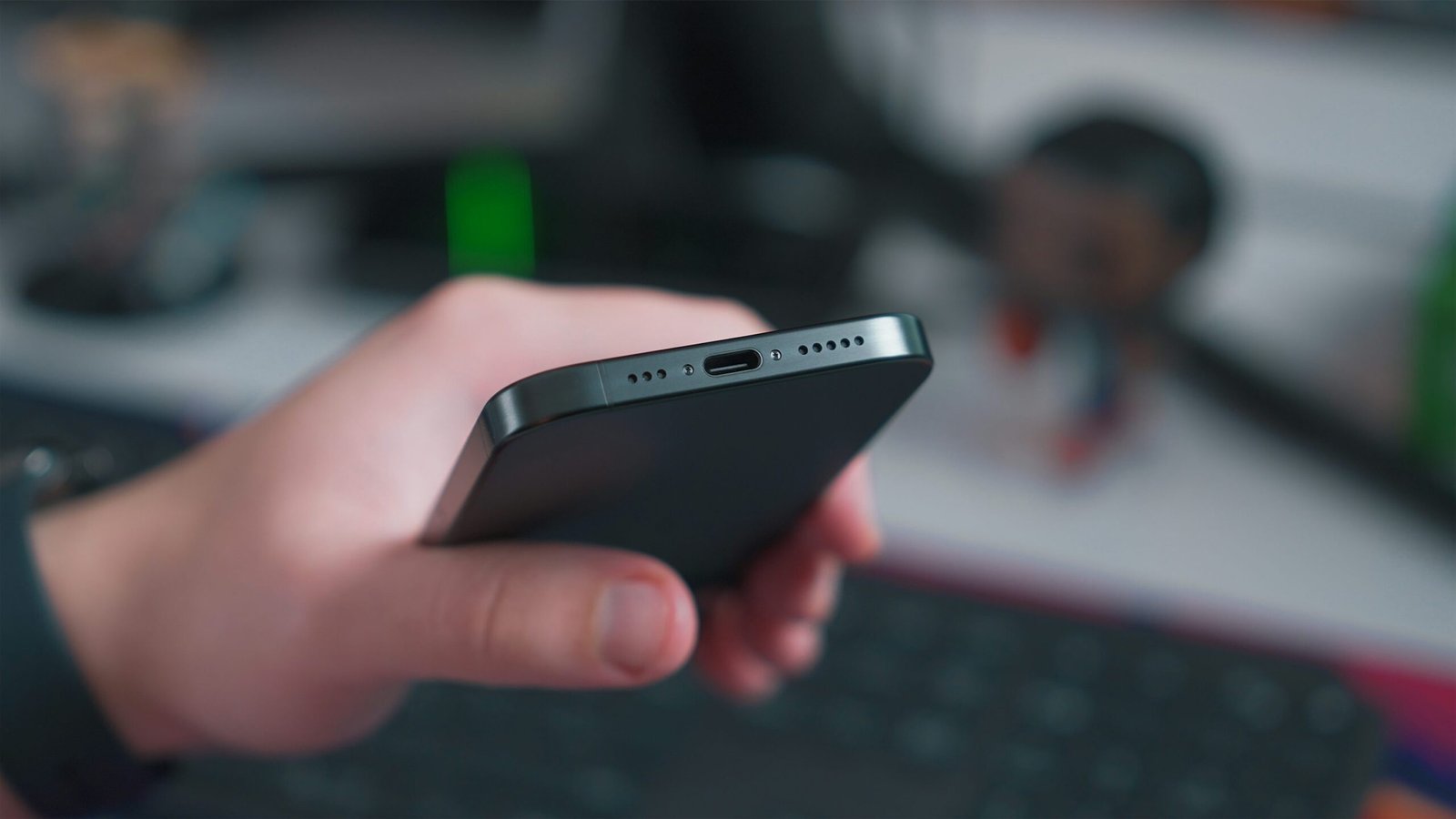
CUPERTINO, USA — A future without the notch or Dynamic Island is finally in sight. According to multiple reliable industry sources, Apple is preparing a major design leap for its upcoming iPhone 18 Pro. The device may debut a brand-new display technology called HIAA (Hole-In-Active-Area), allowing the front camera to sit within the active pixels of the screen itself. This approach could deliver the cleanest, most immersive edge-to-edge display Apple has ever built — a move that would redefine smartphone design all over again.
The idea sounds deceptively simple: make the camera hole so small, so precise, and so perfectly integrated that it disappears into the screen. But behind that simplicity lies some of the most advanced optical engineering Apple has ever attempted. Leaks suggest that this innovation stems from years of R&D across Apple’s display supply chain, involving partnerships with LG Display and Samsung Display to achieve a near-invisible aperture drilled directly into the OLED layer without compromising image quality or structural integrity.
Design Evolution & Concept
For more than a decade, Apple’s iPhone design language has revolved around balance and symmetry. From the introduction of the notch in the iPhone X to the sleeker “Dynamic Island” on the iPhone 14 Pro, the company has always tried to merge function with form. Yet, those visual intrusions remained — small black spots reminding users of the sensors beneath. The upcoming iPhone 18 Pro aims to remove that final trace. With HIAA, Apple’s goal is simple: achieve a screen so unified that it feels like one continuous sheet of light and color.
Sources inside the supply chain have described prototypes featuring a tiny circular hole — less than 0.2 millimeters in diameter — surrounded by functioning pixels. When the screen is on, those surrounding pixels light up, blending the aperture seamlessly into the display. In dark mode or video playback, the hole becomes nearly imperceptible to the human eye. Early test units reportedly showed a 20–25% improvement in perceived display uniformity compared to conventional punch-hole layouts.
To achieve this, Apple engineers rely on ultra-precise laser etching equipment capable of drilling microscopic openings directly through active OLED regions while maintaining pixel connectivity. This required the creation of a new photo-masking technique to preserve current flow between neighboring subpixels. Essentially, the camera now “lives” inside the display rather than cutting into it — a feat that blurs the boundary between screen and hardware.
🎥 YouTube: “iPhone 18 Pro Max – 8 Insane Leaks You Need To See!” (Verified Source)
How HIAA Technology Works
The term “Hole-In-Active-Area” comes from display manufacturing. Most smartphones that use a punch-hole camera cut through a “dead” section of the panel — an inactive border where no pixels function. That’s why the hole appears darker and more visible. HIAA changes that rule entirely. It places the aperture directly inside the pixel-active region, meaning the pixels around the hole continue to function and emit light.
Apple’s implementation reportedly uses a dual-layer micro-lens array combined with anti-reflective coating to balance the light passing through the camera hole. On top of that, software algorithms measure light refraction in real time, dynamically compensating for any loss in exposure or sharpness. This synergy of hardware and software ensures photos remain crisp, color-accurate, and natural despite the new optical path.
To make this even more seamless, the iPhone 18 Pro’s OLED panel may include selectively transparent pixel clusters above the camera sensor. When the camera is in use, these pixels temporarily dim to let light through, acting as a transparent window. When idle, they return to full brightness, effectively hiding the sensor. It’s a technique similar to under-display cameras seen in experimental devices, but Apple’s design prioritizes pixel consistency and color accuracy far beyond what competitors have achieved.
Impact on Face ID & Camera Performance
Apple’s challenge isn’t just hiding the camera — it’s maintaining Face ID reliability. The company reportedly developed an under-panel infrared system that can project its depth-mapping grid through the OLED without interference. This was made possible using a special low-absorption OLED layer stack co-developed with LG. Together, it allows the infrared light to pass through while keeping visible light from the display from disrupting the scan.
Under the hood, the upcoming A20 Pro chip will introduce Apple’s next-generation Neural Engine, capable of real-time reconstruction of facial geometry even with partial occlusion or indirect lighting. This could lead to faster unlock speeds, improved accuracy, and the ability to recognize the user even if the phone is at an angle or partially covered. These are subtle upgrades but essential in making Face ID work flawlessly with the HIAA design.
On the photography side, Apple is pushing its computational imaging even further. The front camera will reportedly feature a new f/1.7 lens with advanced anti-reflective coating to counteract light diffusion caused by the tiny aperture. Combined with Smart HDR 8 and deep-fusion multi-frame learning, it promises better portrait detail and improved color balance in night mode. Essentially, even though the camera is “hidden,” it might produce the most accurate selfies ever seen on an iPhone.
📸 Instagram: Concept render showing iPhone 18 Pro with ultra-tiny HIAA front camera and full-screen design.
Market & User Implications
This design evolution isn’t just aesthetic — it has major market impact. The iPhone 18 Pro’s HIAA screen could symbolize Apple’s return to design dominance at a time when competitors are saturating the market with foldables and AI-centric phones. For consumers, a screen without interruptions means deeper immersion in media, games, and AR experiences. Apple could also leverage the clean design for better ARKit integration, where virtual objects appear directly on the uninterrupted glass canvas.
Analysts predict the feature will initially appear on Pro models before trickling down to standard versions. In India and Southeast Asia, where premium smartphone growth remains strong, a design-centric innovation like HIAA could further push Apple’s market share. Retail displays showing a completely unbroken screen will easily stand out in showrooms. It’s a marketing advantage that combines both engineering sophistication and visual appeal.
For the broader tech industry, Apple’s successful implementation could reset the design race. Android OEMs have experimented with under-display cameras for years, but quality trade-offs have limited adoption. Apple’s “good-enough” balance — nearly invisible camera plus top-tier performance — could finally make the idea mainstream. Expect rival flagships to follow suit by 2027, ushering in a new design era defined by invisible front sensors and uninterrupted display real estate.
Environmental durability will also improve. The smaller aperture reduces stress points on the display glass, increasing crack resistance during drops. Paired with Ceramic Shield 2.0, Apple may advertise the iPhone 18 Pro as both stronger and sleeker — a message that resonates with buyers looking for longevity as well as beauty.
In Short
- Apple’s new HIAA system hides the camera inside active pixels, achieving a true full-screen iPhone experience.
- Face ID and camera quality remain strong thanks to AI-driven reconstruction and adaptive micro-lens arrays.
- The A20 Pro chip introduces smarter, faster image processing and energy-efficient AI for dynamic correction.
- Launch expected late 2026 – early 2027 on Pro models.
- This move re-establishes Apple as a design trend-setter in the premium smartphone segment.
Expert Q&A – iPhone 18 Pro Explained
🤔 What exactly is HIAA and how does it differ from a regular hole-punch camera?
Standard hole-punch designs cut into non-active bezel areas, leaving a dark ring around the lens. HIAA places the opening inside the pixel grid, letting nearby pixels stay lit and appear seamless — virtually erasing the boundary between display and camera.
📷 Will the smaller hole reduce image quality?
Not significantly. Apple combines multi-frame AI stacking, Smart HDR 8, and custom micro-lens arrays to correct for light loss and maintain clarity equal to larger lenses.
🔒 How does Face ID function through the screen?
Infrared emitters and dot projectors operate beneath a semi-transparent OLED layer, allowing depth mapping without interference. The A20 Pro chip reconstructs geometry faster than before.
📱 When will the iPhone 18 Pro launch?
Internal production timelines suggest pilot testing in mid-2026 and a public launch window around early 2027.
💰 Will this make the Pro model more expensive?
Likely yes. The HIAA panel process requires micro-precision equipment and specialized calibration that increase production costs. Apple may keep it exclusive to Pro models initially.
Sources
MacRumors (2025 leak report) | The Elec Display Supply Review 2025 | Display Supply Chain Consultants | 9to5Mac | YouTube @TechZone and @EverythingApplePro | Instagram @techconceptrenders | Apple Insider Forums | Digitimes Display Update Q4 2025







Leave a Reply