

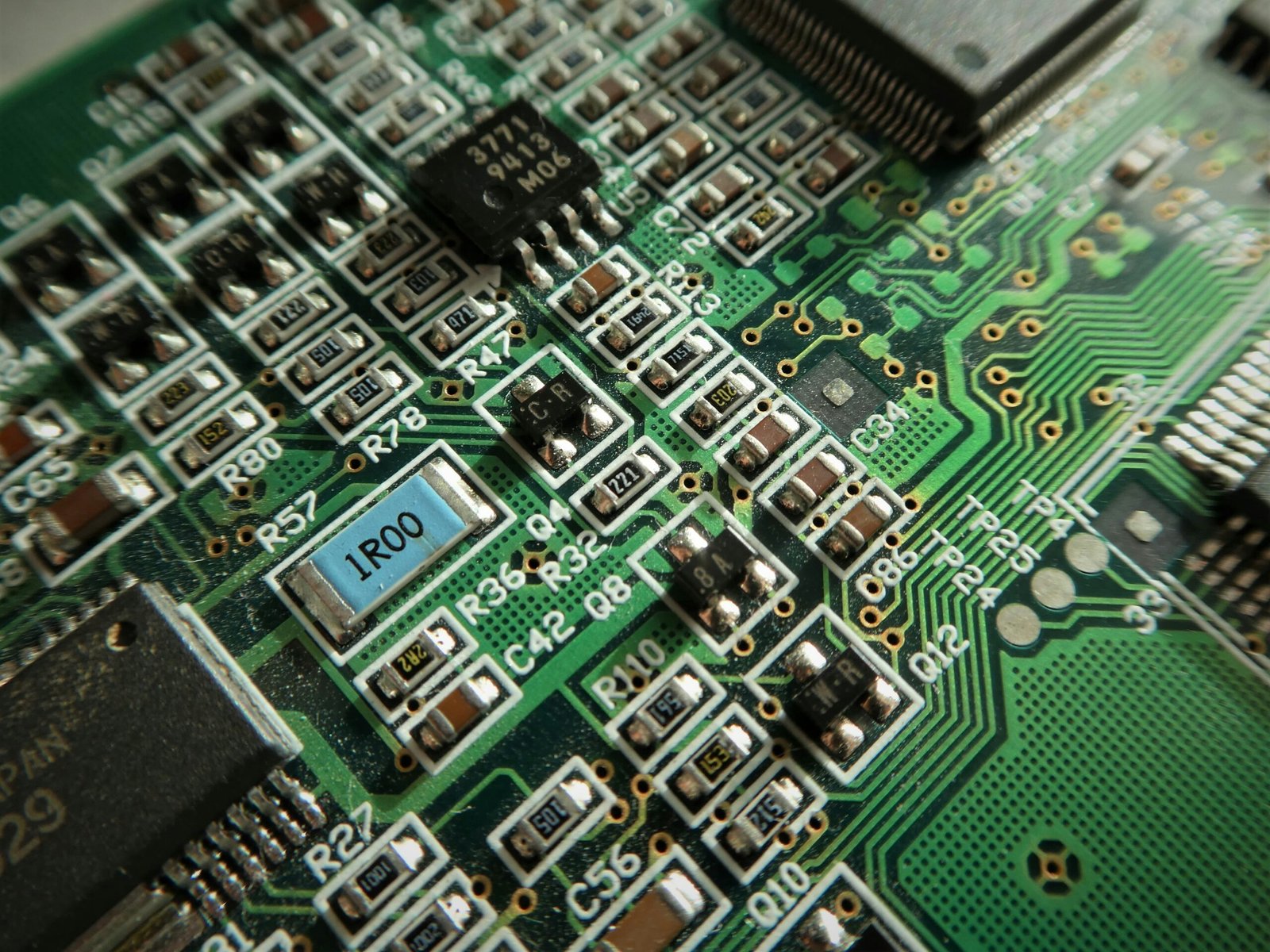
NEW YORK, USA. Nvidia has taken one of the boldest steps in its semiconductor strategy by investing $2 billion into Synopsys, one of the world’s most influential chip-design software providers. The move, confirmed through Reuters and detailed in Nvidia’s newsroom announcement here, represents a major shift in how the company approaches chip development, simulation, and early-stage hardware engineering.
The partnership centers on combining Synopsys’s industry-standard electronic design automation ecosystem with Nvidia’s accelerated computing platforms. According to the companies, engineers will soon have access to deeper AI-driven modeling tools, faster architectural testing, and more realistic simulation capabilities. By investing directly in Synopsys stock — priced at $414.79 per share during the acquisition — Nvidia is positioning itself not only as a hardware leader but as a foundational force behind the next generation of chip-design workflows.
For years, the semiconductor industry has struggled with increasingly complex architectures and the rising cost of manufacturing advanced processors. Traditional design cycles often require lengthy verification stages, multiple prototype iterations, and extensive simulation time. Analysts say Nvidia’s decision to embed its technology into Synopsys’s design platforms could dramatically compress those cycles. Faster simulations mean fewer fabrication errors, reduced development risk, and improved processor performance — all critical factors as demand for high-performance chips accelerates globally.
Industry observers note that the partnership is particularly significant because it merges two global leaders: one specializing in GPU acceleration and AI computing, and the other powering most of the world’s semiconductor design pipelines. Synopsys tools are used by nearly every major chipmaker, and integrating Nvidia’s GPU-accelerated simulation into that ecosystem could reshape how designs move from concept to silicon.
Engineers working on future processors — including high-performance AI accelerators, automotive chips, and data-center architectures — may soon use Nvidia-powered internal workflows to test structural integrity, optimize layout, and simulate real-world performance. These improvements could reduce the need for costly fabrication attempts, which often reach millions of dollars per iteration. Faster turnarounds also mean manufacturers can bring competitive chips to market more quickly, a major advantage in a rapidly evolving industry.
According to early statements from both companies, Nvidia’s Omniverse platform will play a key role in future development stages. Omniverse allows engineers to create digital replicas of physical hardware — known as digital twins — and test performance under a wide variety of conditions. When paired with Synopsys’s design automation, teams gain the ability to analyze chip behavior more realistically, including thermal performance, failure points, computational throughput, and long-term reliability.
Markets reacted immediately to the news. Synopsys shares posted gains following the announcement, signaling investor optimism about the long-term impact of the partnership. Nvidia’s stock experienced typical fluctuations associated with large outgoing investments, but analysts emphasized the strategic value outweighs short-term volatility. Many believe the deal places Nvidia at the center of semiconductor development for the next decade.
Several sectors stand to benefit from the collaboration. Autonomous-vehicle manufacturers, for instance, rely heavily on fast, efficient chips capable of processing huge volumes of sensor data. Medical imaging systems could leverage more accurate modeling to reduce diagnostic errors. Robotics developers may use advanced simulation to test safety scenarios, improve navigation algorithms, and refine real-time control systems. Even climate-modeling supercomputers — which depend on cutting-edge processors — may see faster turnaround times as design cycles accelerate.
Some analysts, however, have pointed to potential concerns. Nvidia already commands a dominant role in AI hardware, and its deeper influence in chip-design tools could raise questions about market competition. Others warn that smaller engineering firms may struggle to keep pace if development tools become increasingly tied to Nvidia’s ecosystem. Still, many experts argue these concerns reflect broader industry pressures rather than Nvidia’s individual choices. The demand for powerful chips has surged far beyond earlier predictions, and companies are racing to meet global requirements.
Despite the competitive debates, the partnership is widely viewed as a logical evolution. AI-powered engineering, accelerated modeling, and digital-twin environments are becoming essential components of modern semiconductor workflows. Nvidia and Synopsys appear well positioned to lead that transition, offering tools that speed development, reduce costs, and deliver more reliable hardware.
In Short:
- Nvidia invested $2 billion into Synopsys to accelerate semiconductor design.
- The collaboration integrates GPU-accelerated simulation into Synopsys workflows.
- Analysts expect faster development cycles and more accurate chip modeling.
Expert Q and A
Why did Nvidia invest in Synopsys?
Nvidia aims to strengthen its position in early-stage chip development by integrating GPU-accelerated simulation into widely used engineering tools.
How will Synopsys benefit?
Synopsys gains access to Nvidia’s accelerated computing platform, enabling faster, more scalable modeling and verification.
Will this change global chip-design timelines?
Yes. The partnership is expected to shorten design cycles significantly by enabling deeper AI analysis and more efficient simulation workflows.
Are there competition concerns?
Some analysts worry that Nvidia’s expanded influence may challenge smaller firms, though others see it as necessary given rising global chip demand.
How will industries benefit from faster chip development?
Improved design speeds will support advancements in robotics, autonomous vehicles, medical imaging, scientific computing, and industrial automation.












Leave a Reply