

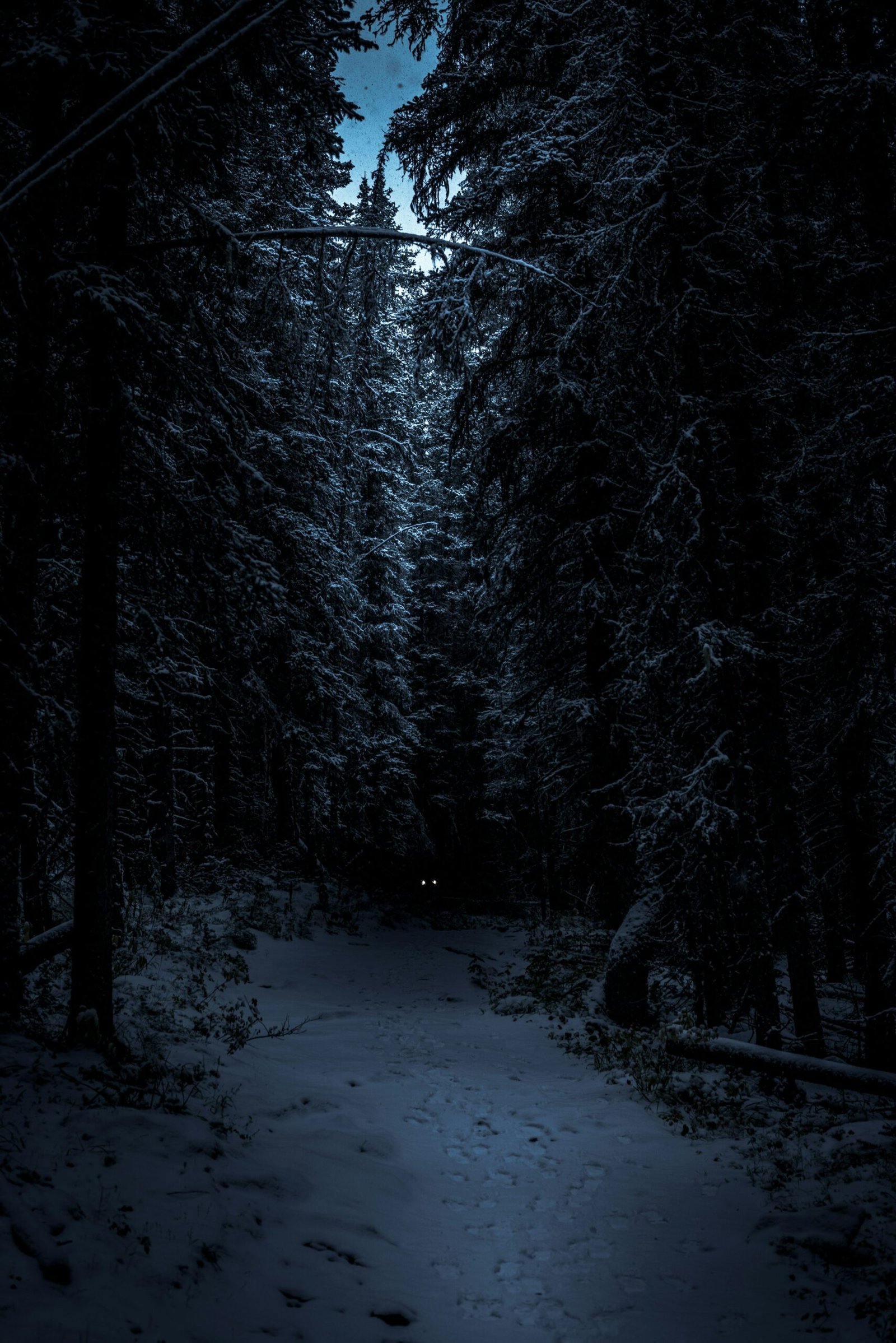
Seventeen years ago, a quiet love story filmed beneath the rain-soaked skies of the Pacific Northwest slipped into theaters and changed the emotional language of an entire generation. It wasn’t loud. It wasn’t explosive. It didn’t rely on spectacle or noise. Instead, “Twilight” breathed — softly, slowly, like a heartbeat rediscovered — and millions felt something in themselves awaken in return.
Today, in 2025, that heartbeat has returned. Not through marketing campaigns, but through memory. Twilight moodboards drift through Instagram; melancholic edits flood TikTok; original tracks from the soundtrack trend again on Spotify; younger fans discover the saga for the first time while older fans rediscover who they were when they loved it.
This is not merely nostalgia — it is emotional archaeology. A reaching back toward first heartbreak, first longing, first love, first ache.
What follows is a cinematic, deeply emotional, documentary-style journey through each film — not summaries, but close readings. A slow walk through the colors, the silences, the trembling gestures that defined the Twilight universe.
This is Twilight, retold through memory.
🌑 Twilight (2008) — The Soft Storm That Started Everything
“Twilight” isn’t a film that shouts its presence. It arrives quietly — with overcast skies, with the hush of wind slipping through pine needles, with a girl who feels unseen and a boy trying desperately not to be seen at all.
What makes the first film extraordinary is its emotional stillness.
Catherine Hardwicke frames the world through the eyes of two people who do not know how to belong to it. The blue-tinted palette is not just a stylistic choice; it is melancholy made visual. The woods are not scenery; they are psychological landscapes where secrets breathe.
Edward and Bella fall in love not through witty banter or dramatic gestures, but through stolen glances, interrupted breaths, trembling stillness. Their romance unfolds in silence — in pauses so long and delicate that the viewer feels almost intrusive watching them happen.
🎬 Trailer — Twilight (2008)
⭐ Scene-by-Scene Deep Emotional Breakdown
The first glance in the cafeteria
The camera does not cut quickly. It lingers — letting Bella’s world tilt slightly as the Cullens cross the cafeteria courtyard like ghosts stepping into daylight. The silence says everything before dialogue begins.
The biology class moment
Still one of the most iconic scenes in modern romantic cinema.
Edward’s reaction — violent, confused, pained — is filmed like a man drowning quietly. Bella, frozen, feels danger and desire in the same breath. The absence of music makes the moment raw.
The forest confession
“Say it. Out loud.”
This is Twilight’s heartbeat — a confession as dangerous as it is intimate. Edward is terrified not of Bella’s fear but of her acceptance.
The meadow reveal
Sunlight on skin like fractured diamonds.
It is one of the most poetic visual metaphors in YA cinema: beauty and danger coexisting. The meadow is a sanctuary — the one place where Edward stops running.
The baseball scene
A fever dream of thunder, speed, and familial joy. Muse’s “Supermassive Black Hole” doesn’t accompany the scene — it defines it. Fans still treat this moment as sacred cinema.
🌘 New Moon (2009) — A Study of Loss, Grief & Beautiful Emptiness
If “Twilight” is the beginning of breath, “New Moon” is the moment that breath is taken away.
It is not a sequel — it is an emotional descent filmed like a poem.
The cinematography cools; wide shots feel lonelier; the editing slows until time becomes elastic.
New Moon does not portray heartbreak loudly — it portrays heartbreak honestly.
The brilliance of the film lies in what it refuses to do. It does not rush Bella’s pain. It does not romanticize her collapse. It allows grief to be as still as snowfall and as suffocating as fog.
🎬 Trailer — New Moon (2009)
⭐ Emotional Layers Expanded
Edward’s departure
The forest scene is clinical and devastating. Edward removes himself from Bella’s life with the precision of a surgeon removing a tumor — except the organ he removes is her joy. His expression is heartbreak in restraint.
The blank-month sequence
The camera rotates as the seasons change around Bella’s window seat.
This is easily one of the most accurate visual depictions of depression ever shown in a YA film. Time passes — but Bella doesn’t.
Jacob’s arrival
Jacob is not framed as a new love — but as warmth returning to cold skin. His smile, his human clumsiness, his growing frustration with Bella’s distance… it all forms a portrait of comfort trying to hold a breaking heart.
The motorcycles
The scenes are not about thrill-seeking — they are about Bella trying to feel anything at all. The editing sharpens, sounds rush closer, the world blurs as Bella searches for sensation.
The cliff dive
One of the most haunting sequences in the entire saga.
Bella dives into water not for death, but for memory. The muffled underwater silence symbolizes grief reaching its peak — and Edward’s apparition represents the echo of a love she cannot outrun.
Italy — the desperate run
The golden light of Volterra contrasts violently with Bella’s inner darkness. Her sprint is filmed like a heartbeat racing against itself — frantic, terrified, determined.
New Moon remains, to this day, the Twilight chapter that hits fans the hardest — because it treats heartbreak with respect. It lets it ache.
🔥 Eclipse (2010) — Where Love Learns the Weight of War
If Twilight was the whisper of first love and New Moon the echo of heartbreak, then Eclipse is the chapter where love becomes something heavier — a choice, a responsibility, a future that demands clarity. The tone shifts noticeably: the camera holds its breath longer; the sunlight sharpens; shadows take on narrative meaning. The characters are older here, not in age, but in burden.
Bella is no longer simply navigating affection; she is navigating destiny. Edward is no longer protecting her from his world; he is inviting her into it. Jacob is no longer just comfort; he is a possibility.
The space between them becomes a battlefield long before the newborn vampires ever arrive.
Eclipse is the most emotionally mature chapter, because it stops asking, “Who do you love?” and starts demanding, “Who do you choose to become?”
🎬 Trailer — Eclipse (2010)
⭐ Deep Cinematic & Emotional Breakdown
The newborn threat
Victoria’s vengeance is not shown as simple villainy; it is grief turned into violence. Her obsession gives the film its quiet dread. The newborns — feral, unstoppable, beautiful in their brutality — symbolize youth without control. Every shot of them mirrors Bella’s internal war: a life changing too fast.
The training sequences
In the meadow where love once bloomed, the Cullens now prepare for war. The contrast is deliberate. What was once a sanctuary becomes a battleground. Yet the choreography is strangely graceful — like dancers rehearsing for a performance they pray will never happen.
The film blends dread with elegance, turning combat into a tragic ballet.
The tent scene
Few scenes in YA cinema carry this much emotional density. The blizzard howls, but the real storm is inside the tent. Edward’s jealousy is quiet, dignified, painful. Jacob’s confidence is familiar, warm, dangerous. Bella shivers — caught between two forms of love.
This triangle is not a gimmick. It is three people suffocating under the truth that love alone cannot solve everything.
Bella’s choice
The most misunderstood yet most mature moment in the entire saga is Bella choosing Edward — not out of fantasy, but clarity. She is choosing the life that aligns with her interior world, not the safest or easiest path.
Eclipse elevates Bella from a girl in love to a woman who understands sacrifice.
💍 Breaking Dawn — Part 1 (2011)
Love, Fragility & the Beauty of Becoming
Breaking Dawn — Part 1 is a film of contrasts: soft wedding petals and hard, shadowed bones; whispered vows and screams muffled behind closed doors; joy blooming at the surface while terror brews beneath.
It is the most intimate film of the saga — not because of romance, but because it explores what love costs when it finally becomes real.
The cinematography is warm at first — golden, glowing, dreamy. This visual innocence is intentional, because the film knows what is coming: love that turns into fear, hope that turns into danger, a body that transforms into something both divine and horrifying.
🎬 Trailer — Breaking Dawn: Part 1
⭐ Deep Emotional Expansion
The wedding
This scene feels like the conclusion of a fairytale and the beginning of a myth.
Bella’s breathless walk toward Edward is filmed in soft focus, the world blurring as if time itself steps aside. When their hands meet, there is no dramatic swell — only a quiet exhale shared between two souls who have run out of reasons to fear their love.
The honeymoon
Unlike typical romantic films, their intimacy is shown with tenderness, not spectacle.
The morning-after scene — feathers falling, bruises blooming, Edward drowning in guilt — is a study in how love can be both gentle and overwhelming. Fans still analyze this duality today.
The pregnancy horror
This is where the film fractures — aesthetically and emotionally.
Color drains from the frame. Bella’s bones sharpen. Edward’s confidence collapses. Jacob’s heartbreak deepens into anger.
Breaking Dawn treats Bella’s pregnancy like a gothic transformation — a love story mutated into survival.
The birth
Raw. Terrifying. Uncomfortable.
It’s a scene crafted to confront the viewer with the brutality of sacrifice. Edward’s desperation, Jacob’s heartbreak, Bella’s near-silence — every frame is breathless.
And then her heartbeat stops.
For a moment, the world stops too.
The transformation
Her veins crystallize.
Her spine straightens.
Her skin glows.
The music softens.
Bella awakens — not as a monster, but as a perfected version of love’s endurance.
⚡ Breaking Dawn — Part 2 (2012)
A Goodbye Written Like a Love Letter
If the earlier films are whispers, Breaking Dawn Part 2 is an orchestral swell — a finale crafted with restraint and reverence.
It knows it is the end, and so it treats every moment as memory.
The tone is brighter, the stakes larger, yet beneath the spectacle lies a poem about love, family, fate, and legacy.
🎬 Trailer — Breaking Dawn: Part 2
⭐ Scene-Level Cinematic Exploration
Bella as a newborn vampire
The camera celebrates her strength not with slow motion, but with clarity. Bella sees the world with sharpened edges — her senses finally aligned with her heart. Her embrace with Edward is not romantic; it is cosmic. This is what she was meant to become.
Renesmee
She is portrayed not just as a child, but as a symbol of a new world — a world that terrifies the old guard. Her presence creates political tension, beauty, and danger.
She is innocence wrapped in prophecy.
The Volturi standoff
A theater moment unlike any other — gasps, screams, sobs, disbelief.
Heads fly. Wolves fall. Characters fans loved for years appear to die in seconds.
It is chaos, filmed with heartbreaking beauty.
Then — the vision.
The reversal.
The relief that hits like oxygen returning to collapsed lungs.
The final montage
The turning pages.
The soft piano.
The faces we grew up with.
This scene is not for the characters — it is for the fans.
It is the filmmakers reaching through the screen to say,
“Thank you for loving us.”
🎵 The Soundtrack — The Pulse That Never Stopped Beating
No other YA film series used music the way Twilight did.
Songs were not background noise; they were emotional narration.
Indie tracks hummed beneath scenes like confessions the characters were too afraid to speak.
Even today, these songs trigger instant emotional memory.
“Decode” — Paramore carried the sharp ache of confusion.
“Eyes on Fire” — Blue Foundation became the anthem of longing.
“Supermassive Black Hole” — Muse defined supernatural swagger.
“A Thousand Years” — Christina Perri became the wedding song of a generation.
Iron & Wine’s “Flightless Bird” remains one of the most romantic film tracks ever used.
Twilight didn’t follow pop trends.
It created its own emotional soundscape — moody, quiet, aching.
A soundscape fans still return to when they want to feel something real.
🌐 The Fandom — A Love Story That Never Ended
Twilight’s fandom did the impossible — it survived trends, platforms, criticism, memes, and time.
Tumblr birthed the first aesthetic edits.
Instagram curated the soft forest aesthetics.
YouTube crafted AMVs long before “edit culture” existed.
And TikTok resurrected everything in 2024–2025 with raw emotional nostalgia.
Why does Twilight keep returning?
Because it was never just entertainment.
It was a safe place — a feeling, a season of life, a soft mirror held up to young hearts trying to understand themselves.
✨ If Twilight Continues — The Saga-6 the World Secretly Hopes For
Every era asks for the stories that shaped it to return — not for repetition, but for reflection. As Twilight’s nostalgia blooms again in 2025, fans find themselves wondering:
“What would a continuation look like, if handled with care?”
Not a reboot. Not a re-casting. But a story that grows where the last one left off — gentle, mature, cinematic.
To envision the future of Twilight, one must begin with the single character who carries both the legacy and the unknown within her:
Renesmee Cullen.
🌙 Renesmee — The Heartbeat of a New Era
Renesmee is neither human nor vampire — she is something the world has never seen.
Her existence challenges ancient laws, terrifies old powers, and offers a bridge between species that have lived in opposition for centuries. A continuation centered on her would allow Twilight to evolve without erasing its roots.
As an adult, Renesmee would be a character built for modern storytelling: introspective, conflicted, powerful, fragile. Her ability to share her memories by touch could turn scenes into dreamlike visuals — flashbacks blooming like watercolor against the present.
It’s cinematic potential waiting to be unlocked.
🛡️ Jacob — Guardian, Guide, Anchor
A new story does not need to make Jacob a romantic complication.
It can make him something better.
Something dignified.
Something emotionally grounded.
With years of maturity, Jacob becomes a steady force in Renesmee’s life — a protector with loyalty rooted not in imprinting, but in choice. Their bond evolves into a partnership of trust, shaped by shared danger and unspoken history.
This dynamic—gentle, respectful, balanced—would resonate strongly with modern audiences tired of love triangles and hungry for emotional nuance.
🕯️ The Return of Shadows — A New Threat Rises
A world without the Volturi is not a world at peace — it is a world without structure.
After their defeat, a vacuum forms.
And in that vacuum, a hidden faction gathers — old loyalists, ambitious young immortals, scholars obsessed with vampire law.
Their goal is not destruction, but resurrection — to rebuild the Volturi in secrecy, studying Renesmee as the “key” to a new supernatural era.
They see her not as a child, not as a person, but as a symbol they must possess.
This threat is colder, quieter, more strategic than anything the Cullens have faced before — political instead of physical, ideological instead of violent.
The perfect conflict for a mature continuation.
📖 Edward & Bella — Legends, Not Leads
A successful Saga-6 must treat Bella and Edward with reverence — not as main characters, but as mythic presences whose moments on screen carry emotional weight.
Edward offering quiet warnings.
Bella offering fierce protection.
Scenes where their eyes tell entire histories.
Moments that remind the audience not only of the story’s past, but of their own past — who they were when they first loved this saga.
Their appearances should feel like gentle waves of nostalgia washing through the narrative — not dominating, but deepening it.
🎨 The Aesthetic — A Return to Twilight’s Soul
Twilight was never defined by action — it was defined by atmosphere. A new series should return to:
- mist-soft blues and silvers
- quiet forests breathing in slow focus
- close-up shots of trembling hands
- stolen glances caught in softened light
- music that feels like a heartbeat under water
In an age of loud reboots and neon action, a soft, atmospheric saga would feel revolutionary — a love letter to what made Twilight unforgettable.
🌟 Why Fans Would Watch It Instantly
Because Twilight is not a fad.
It is emotional memory.
A mirror people revisit to remember a version of themselves they thought they had lost.
Saga-6, if treated with love, would not just revive a franchise — it would revive a feeling.
🔎 In Short — A Gentle Recap
- Twilight’s return in 2025 is driven by memory, emotion, and rediscovery.
- Each film in the saga carries a unique emotional color — innocence, heartbreak, conflict, transformation, closure.
- The soundtrack shaped an entire generation’s emotional landscape.
- The fandom remains powerful because Twilight was never just fiction — it was identity.
- A future Saga-6 centered on Renesmee would feel natural, mature, and cinematic.
❓ Frequently Asked Questions
Because as fans grow older, they finally understand the quiet emotions the films held — longing, fear, heartbreak, hope.
New Moon — its portrayal of loss is timeless, universal, and filmed with poetic honesty.
Yes, but only as emotional anchors — their presence should deepen the story, not overshadow it.
Because the saga’s soft cinematography pairs perfectly with modern aesthetic trends and emotional music.
Absolutely — if it protects the original tone: softness, longing, atmosphere, emotional honesty.
💖 Final Words — A Saga That Became a Memory
Twilight is more than a series — it is a season of life.
A soft cold morning.
A trembling confession.
A love that felt impossible, but somehow real.
When fans revisit Twilight today, they are not only rewatching a movie —
they are rewatching who they once were.
And that is why, after all these years, the saga still glows quietly in the hearts of millions.
Some stories fade.
Twilight lingers.





Leave a Reply