

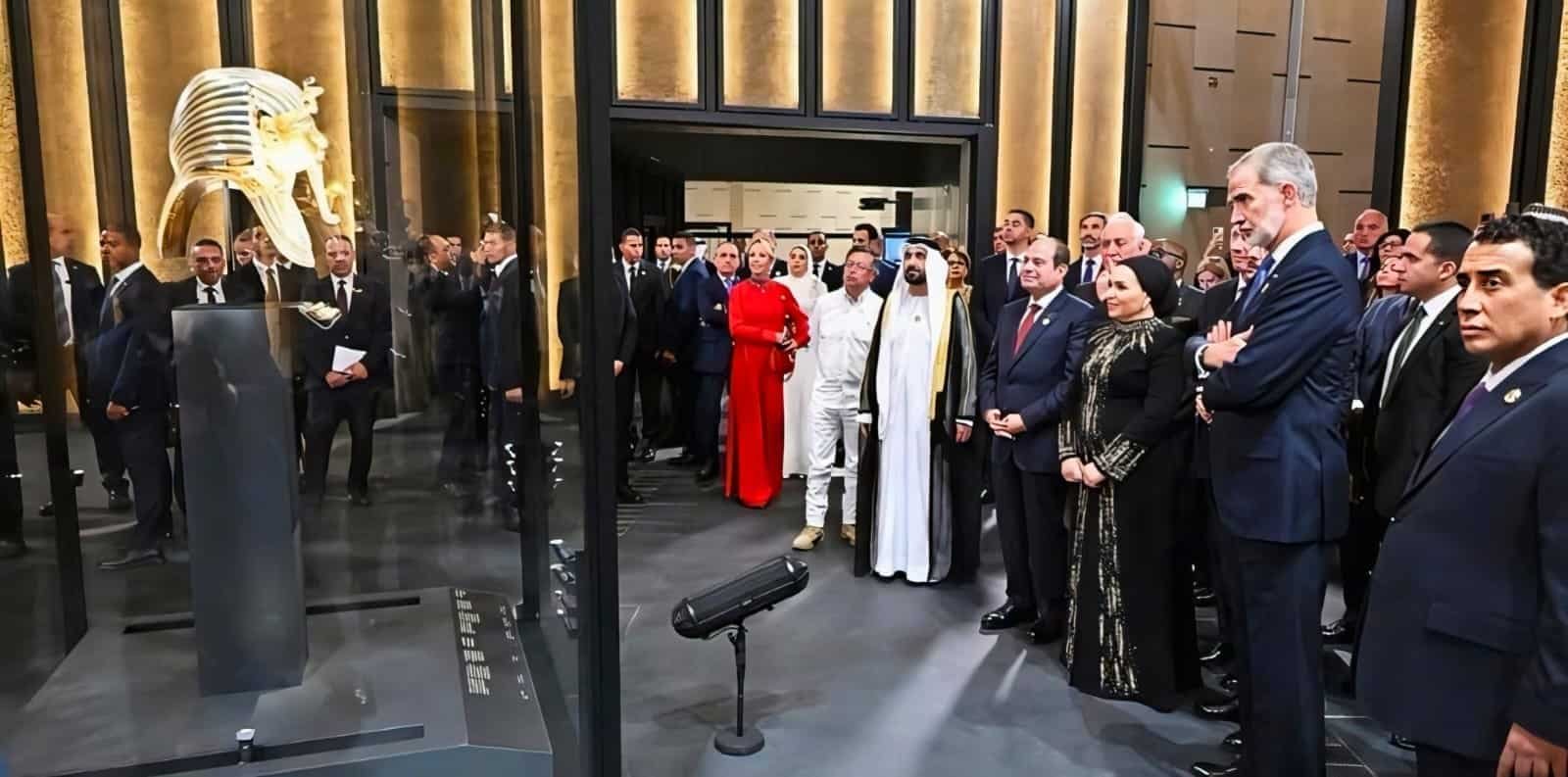
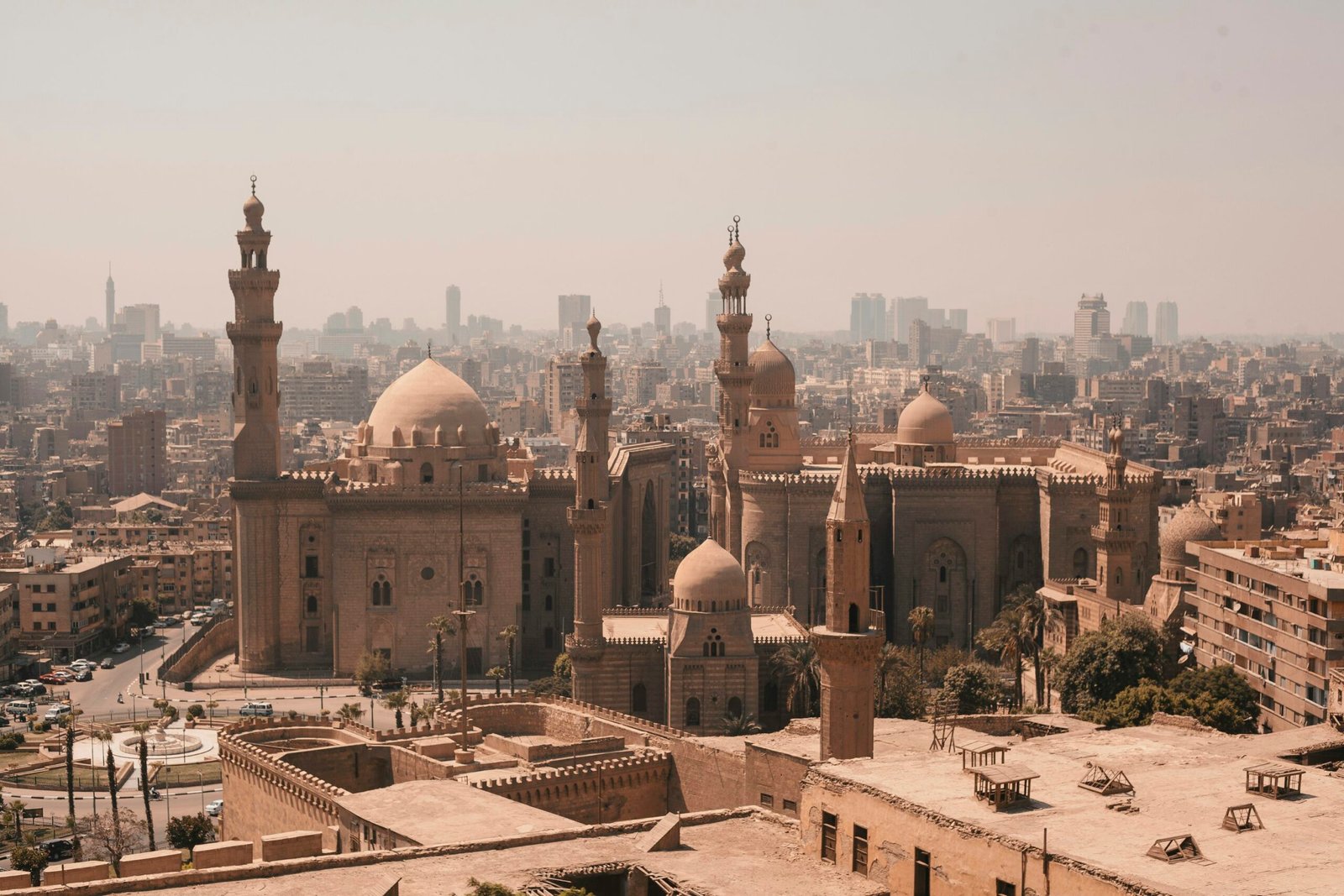
Cairo, Egypt — The desert winds of Giza carried the echoes of history as Egypt opened its long-awaited Grand Egyptian Museum (GEM) on November 1, 2025. After more than two decades of anticipation, delays, and reconstruction, the vast structure — sitting just a short distance from the Pyramids — finally welcomed its first visitors. The GEM, now declared the largest archaeological museum in the world, is not just a cultural landmark but a monumental bridge between Egypt’s ancient glory and its modern aspirations.
The event was nothing short of cinematic. As golden lights washed across the colossal façade, dignitaries, scholars, and journalists from around the world gathered to witness Egypt’s most ambitious cultural project. Fireworks illuminated the Giza skyline, blending the timeless silhouette of the pyramids with a futuristic architectural wonder. After two decades of planning, Egypt officially ushered in a new era of heritage preservation, tourism, and global cultural leadership.
A Dream Two Decades in the Making
The Grand Egyptian Museum’s journey began in the early 2000s, when Egypt’s Ministry of Antiquities envisioned a modern home for the country’s vast archaeological treasures — a replacement for the aging Egyptian Museum in Tahrir Square, Cairo. The new site was selected near Giza to create a seamless link between Egypt’s most iconic monuments and its cultural narrative. However, what began as a dream of swift construction evolved into a long saga of perseverance.
Political unrest during the 2011 revolution, financial constraints, and later the global pandemic all forced repeated delays. Each obstacle pushed the opening further into the future, until 2025 became the symbolic year of completion. The total cost exceeded $1.2 billion, funded largely by the Japanese government and international cultural grants. But today, officials say it was worth every year and every dollar — positioning Egypt at the forefront of world heritage protection.
The architectural design, conceived by Heneghan Peng Architects of Ireland, was chosen through an international competition in 2002. Their vision embraced geometry, light, and alignment with the Great Pyramid itself. The result is a triangular masterpiece: a 490,000-square-metre complex of golden stone and glass, harmonizing with the desert horizon.
Inside the Grand Egyptian Museum
Visitors enter through a vast forecourt dominated by a 3,200-year-old statue of Ramses II, relocated from Cairo’s Ramses Square. The statue stands as if welcoming Egypt’s pharaohs back home. From there, a grand staircase leads upward through galleries filled with more than 100,000 artefacts spanning 5,000 years of Egyptian history.
The centerpiece is the complete Tutankhamun collection — over 5,000 artefacts discovered by Howard Carter in 1922. For the first time ever, every piece from the boy king’s tomb — from his gold mask and sarcophagus to chariots, furniture, and weapons — is displayed together. Each artefact sits in custom-built glass cases, monitored by humidity sensors and soft LED lighting to ensure long-term preservation.
Archaeologist Dr Mostafa Waziri described the collection as “a story told in gold.” “This museum,” he said, “is a declaration to the world that Egypt’s history belongs here, in Egypt — preserved and shared for generations.”
Beyond Tutankhamun, the museum showcases colossal statues, papyrus scrolls, mummies, and intricate jewelry — much of it never displayed before. Modern technology, including augmented-reality installations and interactive 3D reconstructions, allows visitors to explore the ancient world like never before.
Architecture That Mirrors Civilization
The museum’s design itself tells a story. Every line and triangle subtly echoes Egypt’s ancient symbols. The façade is made from translucent alabaster panels, reflecting the shifting desert light. As the sun sets behind the pyramids, the building glows amber, almost as if alive.
Inside, temperature-controlled chambers and laboratories allow ongoing conservation work. GEM includes one of the world’s largest antiquities conservation centers, with more than 17 specialized labs where experts restore fragile relics daily. The museum’s engineers worked with international scientists to design vibration-resistant floors that can protect artefacts from Cairo’s occasional tremors.
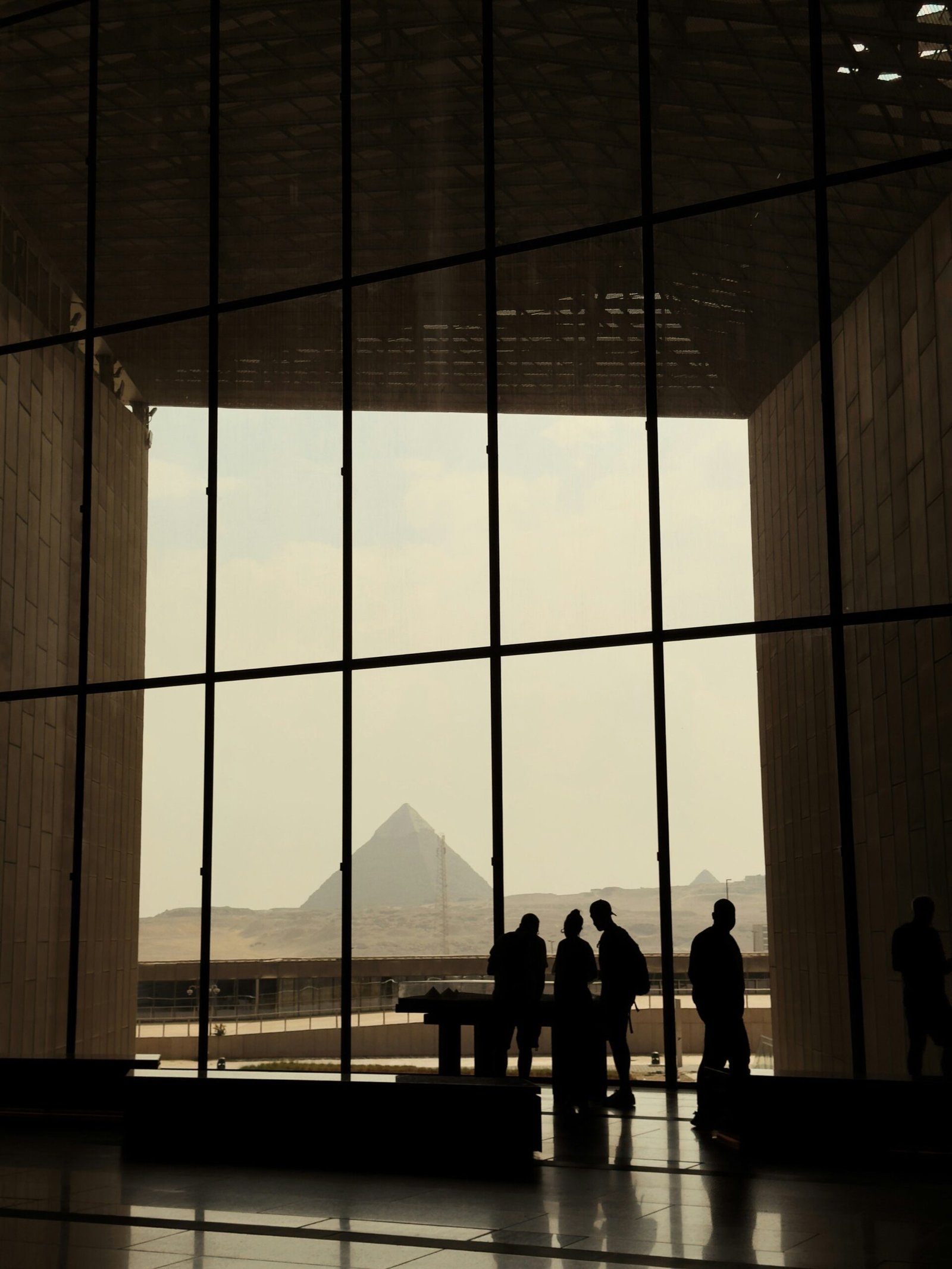
Heneghan Peng Architects said the goal was to create “a museum that belongs to both the desert and the future.” Its glass façade directly frames the Great Pyramid — a deliberate design that makes the ancient monument appear as part of the exhibition itself.
Economic Revival Through Culture
Egypt’s government hopes the GEM will not only honor the past but reshape the country’s economic future. Tourism once accounted for 12% of Egypt’s GDP but suffered during years of instability. Officials estimate the museum could attract 8 million visitors annually, potentially generating billions in cultural tourism revenue. Airlines, hotels, and local businesses are already reporting spikes in bookings since the museum’s soft opening announcement earlier this year.
“The Grand Egyptian Museum will be our Louvre, our legacy to the world,” said Egypt’s Minister of Tourism Ahmed Issa. “It stands as proof that Egypt is not just the land of the past, but also the land of progress.”
The surrounding Giza area has undergone massive redevelopment. New roadways, visitor centers, and the Sphinx International Airport — located just 30 minutes away — now serve the site. A metro line linking central Cairo to Giza is also underway, easing transport for locals and tourists alike.
🎥 Watch: BBC World coverage of the Grand Egyptian Museum opening
International Reaction
The response from the global community has been overwhelmingly positive. UNESCO hailed GEM as “a landmark in the global mission to preserve humanity’s shared history.” Archaeologists from Europe and the United States praised the museum’s emphasis on Egyptian stewardship — an important counterpoint in debates about artefact repatriation.
Visitors have called the experience “a journey through time.” Reviews from early access tours describe immersive storytelling through soundscapes, holographic displays, and life-size recreations of temple walls. Even before the official opening, social media buzz turned GEM into one of the most-searched destinations on Google in late 2025.
“Every room is breathtaking,” said British historian Jane McAllister. “It’s not just a museum — it’s a living textbook.”
📸 Instagram: Visitors share first glimpses from the Grand Egyptian Museum’s Tutankhamun wing
Technology Meets Timelessness
The GEM integrates cutting-edge technology with archaeology. Visitors can scan QR codes beside artefacts for AI-driven translations and historical context. A “virtual timewalk” allows smartphone users to overlay AR scenes showing how artefacts appeared in their original settings — temples, tombs, and palaces.
The museum’s lighting and sound design are built on algorithms that simulate daylight changes through the centuries. At night, the main hall glows under a constellation-inspired ceiling projection, symbolizing Egypt’s ancient connection to the stars — a theme that once guided the construction of its pyramids.
Curators collaborated with NASA engineers for humidity sensors and with Google Arts & Culture to digitize thousands of artefacts. The result is a museum that’s not only physical but also virtual — accessible worldwide through high-resolution scans and VR exhibits.
The Global Heritage Message
For Egypt, GEM carries symbolic weight beyond tourism. It sends a message about ownership, identity, and cultural pride. In the 19th and 20th centuries, thousands of Egyptian artefacts were removed to foreign museums. Now, Egypt’s leadership says it’s time for the world to visit *their* museum, on *their* soil.
“This museum is Egypt’s message to humanity,” said President Abdel Fattah el-Sisi during the inauguration. “We are the guardians of one of the oldest civilizations — and we welcome the world to see it preserved, protected, and celebrated here.”
UNESCO Director-General Audrey Azoulay echoed that sentiment, calling the opening “a triumph of cultural diplomacy.” Many see GEM as a blueprint for other countries seeking to reclaim and display their heritage responsibly.
Behind the Scenes: A Titan of Logistics
Building the Grand Egyptian Museum was not only an architectural feat but a logistical marvel. The transfer of artefacts from Cairo’s old museum required years of precision planning. Experts created custom vehicles and shock-absorbent containers to move fragile objects like the gold coffin of Tutankhamun and the Rosetta-era statues.
More than 5,000 experts and workers participated in the relocation, while international conservators trained Egyptian staff in modern preservation methods. Laboratories within GEM now serve as a regional hub for research, employing hundreds of archaeologists and engineers from across Africa and the Middle East.
Looking Ahead
The GEM is not static — future plans include rotating international exhibitions, educational programs for schools, and partnerships with global museums. Egypt’s Ministry of Culture announced that upcoming years will feature collaborations with the British Museum and the Louvre on shared restoration projects.
Economists estimate that the museum could generate over $700 million annually in direct and indirect revenue. Its opening also coincides with Egypt’s “Vision 2030” development strategy — aiming to position the country as a cultural powerhouse connecting Africa, the Middle East, and Europe.
In Short 🏺
- Egypt has opened the Grand Egyptian Museum, the world’s largest archaeological museum, near the Pyramids of Giza.
- The project took over 20 years and cost about $1.2 billion.
- The museum houses the full Tutankhamun collection for the first time in history.
- Architecturally stunning, GEM integrates modern design, technology, and advanced conservation labs.
- Officials expect millions of visitors annually and billions in cultural tourism revenue.
- UNESCO and global leaders have hailed it as a triumph of heritage preservation.
Category: World | November 2025




إسراء
كنت هناك