

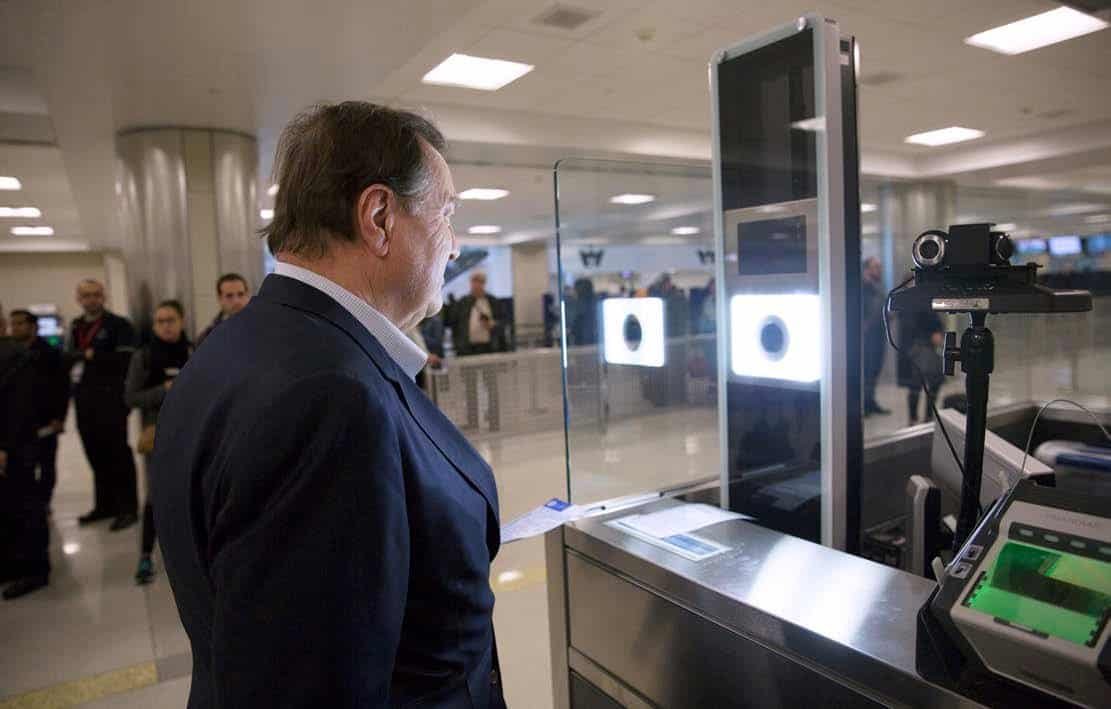
Washington D.C. — The Department of Homeland Security (DHS) has unveiled a sweeping new rule requiring all non-citizens entering or leaving the United States to provide biometric data — including facial scans and fingerprints — beginning late 2025. Officials say the system will strengthen border security and modernize identity verification, while privacy advocates warn it could open the door to mass surveillance.
The plan, announced in an official DHS briefing on Monday, expands the current pilot programs used at major U.S. airports into a full national rollout. Once fully implemented, every foreign traveller — from tourists and students to workers and long-term residents — will undergo automated biometric screening at both entry and exit points.
Why DHS Says It’s Needed
DHS Secretary Alejandro Mayorkas emphasized that the biometric rollout is aimed at closing security gaps and reducing fraud. “Biometric identity verification ensures the person presenting a travel document is the rightful holder,” Mayorkas stated. “It reduces human error, speeds up processing, and safeguards against terrorism and unlawful entry.”
The system integrates facial recognition, iris scans, and digital fingerprinting through the Traveler Verification Service (TVS). DHS claims this AI-driven process will cut wait times by up to 40 percent compared to manual checks.
How It Will Work
At international airports and seaports, travellers will step before a camera that instantly matches their live image against the passport photo on file. For departures, cameras at boarding gates will confirm a traveller’s identity automatically without presenting documents again. Land borders will adopt fingerprint kiosks and mobile scanners.
U.S. citizens are exempt, while children under 14 and adults over 79 will generally remain outside the mandatory scan group. DHS says any false matches will be reviewed manually by Customs and Border Protection officers.
Concerns About Privacy and Data Retention
Civil-liberties organizations, including the Electronic Frontier Foundation (EFF) and the American Civil Liberties Union (ACLU), have criticized the rule for potential overreach. “Collecting biometric data on this scale risks normalizing surveillance and creating vast databases ripe for misuse,” said EFF attorney Rachel Levin. They call for independent oversight and strict deletion policies for biometric records.
DHS counters that data will be encrypted and stored only as long as necessary for legal or operational purposes, though exact timelines remain unclear.
Impact on International Travellers
Visitors should expect faster but more automated airport experiences. Most airports already using biometric boarding report high accuracy rates and smoother passenger flow. Still, advocacy groups warn of difficulties for those whose appearance has changed due to medical, religious, or gender-related reasons. Travellers who decline scans for personal reasons may face additional questioning or manual inspection.
Global Trend
The U.S. joins countries such as the U.K., Singapore, and Australia in adopting AI-powered border control. Analysts say it’s part of a larger international shift toward digital identity verification.
Expert Insight
“Biometric controls improve security but also centralize sensitive data,” said Prof. Laura Higgins of Georgetown University’s Center for Security & Technology. “The key is ensuring transparency, short retention periods, and clear opt-out rules.”
Watch: DHS Biometric Rule Explained (CBS News)
If the video does not load, click here to watch on YouTube.
Also Watch: DHS Biometric Rollout (ABC / CNN Coverage)
If the video does not load, watch on YouTube.
Public Reaction on Instagram
Here’s a verified U.S. news post discussing the biometric rollout:
How to Prepare Before You Travel
- Renew old passport photos and ensure they closely match your current appearance.
- Remove hats, sunglasses, and masks at biometric checkpoints.
- Join Trusted Traveller programs like Global Entry for expedited lanes.
- Arrive early during the initial rollout to avoid confusion.
Industry and Airline Response
Airlines have welcomed the rule, noting that biometric boarding reduces boarding time by several minutes per flight. Tech firms like IDEMIA and NEC, who supply recognition systems, say the infrastructure is ready for large-scale use. Still, they acknowledge that facial recognition must be regularly audited to prevent bias.
Congressional Oversight Expected
Several lawmakers, including members of the Homeland Security Committee, have announced plans to review DHS privacy protections. A bipartisan privacy bill under discussion could require annual transparency reports and limited retention periods for biometric data.
In Short
🧾 In Short:
- The U.S. will require biometric data collection from most non-citizens starting late 2025.
- DHS claims it will speed processing and improve border security.
- Privacy advocates warn about data misuse and surveillance risks.
- Travellers can prepare by updating documents and arriving early.
- Congress may impose new privacy oversight rules.
Sources: Sources: Department of Homeland Security, Customs and Border Protection, CBS News, ABC News, Reuters, AP. This article follows NewsSparq editorial guidelines for accuracy and neutrality.










Leave a Reply