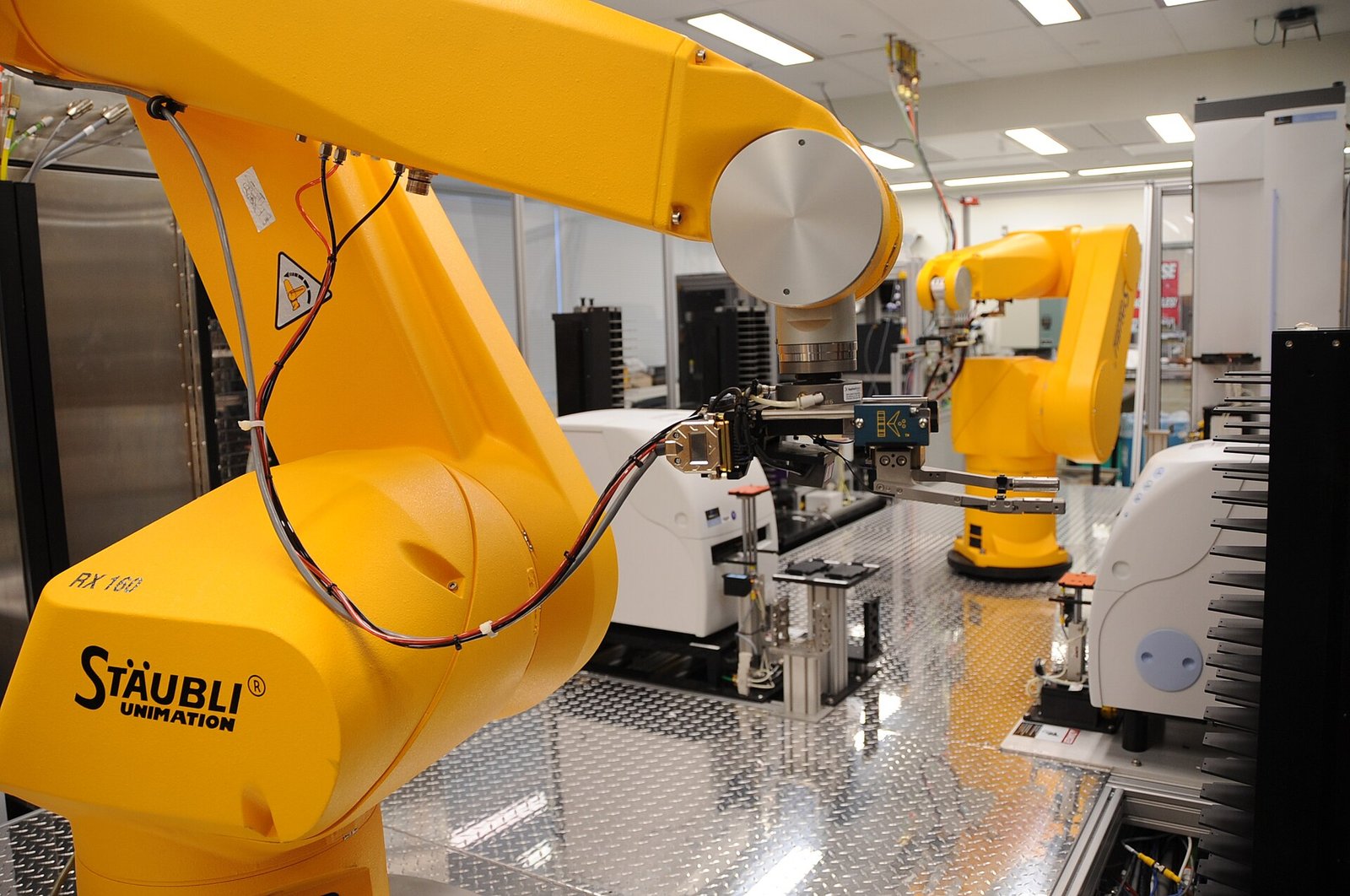
There are comeback stories, and then there is getting your old company to help fund the new one nine years after it pushed you out. On July 22, Travis Kalanick’s industrial AI and robotics company Atoms announced it had raised $1.7 billion in equity. Uber was on the list of investors.
The round was led by Andreessen Horowitz, with Ben Horowitz joining the Atoms board, TechCrunch reported. Kalanick co-founded Uber and was pushed out as chief executive in 2017 amid harassment and discrimination complaints and a broader reckoning over the company’s workplace culture.
Who put money in
Beyond a16z and Uber, the investors named across reporting include Bain Capital, Fifth Wall, Chemistry, A*, K5 Global, Abstract, SV Angel and Alpha Square Group.
One number is conspicuously absent, and it is worth saying so plainly rather than letting readers assume. No post-money valuation was disclosed. Any figure you see attached to this round is inference rather than reporting. There was also one outlet carrying a smaller round size than the $1.7 billion figure that four or more outlets corroborated, and we are going with the corroborated number.
What Atoms actually is
Atoms is not a new company wearing a new name so much as a rebranded holding company built on top of CloudKitchens, formally City Storage Systems, the ghost kitchen venture Kalanick has run since leaving Uber. The Atoms name surfaced publicly in March 2026 after roughly eight years of relative stealth.
It operates three divisions: Atoms Food, Atoms Mining and Atoms Transport. The mining arm came from acquiring Pronto, the heavy-industry automation company run by Anthony Levandowski, a former Uber colleague of Kalanick’s whose own history with the company is its own long story.
The thesis is that the digital economy has been thoroughly optimised and the physical one has not. Everything is grown or mined, manufactured and moved, Kalanick said. That is industry. Mining, construction, heavy transport, food production are just a few examples of atoms-heavy industries awaiting massive digital transformation, he told The AI Insider.
Kalanick is framing this as unfinished business
He said so almost literally. On many levels, this round is a bit of unfinished business, Kalanick said. Fuel to complete the bits-to-atoms story arc we started at Uber, continued at CloudKitchens and will now finish at Atoms.
Read that sentence with the investor list in mind and it becomes remarkable. The arc he describes as unfinished was interrupted by his removal from Uber, and Uber is now helping finance the completion of it. Elsewhere he has described the ambition as building a wheelbase for robots, and the broader goal as building atoms-based computers.
Horowitz is betting on the operator, not the sector
Ben Horowitz’s public case was unusually personal. It takes a rare kind of entrepreneur to change these old-school, heavy parts of our economy, he said. Travis is that guy. He published an essay under the title Travis Is Back, as dot.LA noted.
On the technology itself Horowitz was equally direct: it is inevitable that within a generation, robots are going to do most of the menial work in the world of atoms.
That framing is the actual investment thesis. This is not primarily a bet that industrial robotics is ready. It is a bet that a founder with a demonstrated capacity to force change into entrenched, heavily regulated physical industries is the right person to attempt it, with all of the history that particular capacity carries.
The round did not happen in isolation
Atoms was the largest disclosed round in the window but not the only notable one. On July 23, AI chip startup Etched hit a $10.3 billion valuation on a $300 million Series C led by Sequoia, with a16z, SK hynix, Jane Street and Diffusion Capital participating alongside individual investors including Peter Thiel, Andrej Karpathy, Dylan Field and Amjad Masad, TechCrunch reported.
Etched’s valuation doubled from $5 billion in December 2025. The company has around 400 employees, roughly $1 billion in pre-booked orders, a two megawatt data centre live and a new ten megawatt facility in Milpitas. TechCrunch reported it as the highest valuation ever for a Sequoia-led Series C.
Why This Matters
The capital is rotating. For three years the largest private rounds went to companies building models and the software layer above them. Atoms and Etched are both bets on the physical layer, one on robots that move material and one on the silicon that runs the models, and between them they absorbed roughly $2 billion in a single week.
The Uber detail is more than a good line. Institutional investors and corporate strategics making a deliberate decision to back a founder they previously removed is a real signal about what Silicon Valley currently prices highest. Returns are being weighted above reputational caution, openly, with Horowitz publishing an essay to make sure nobody misses it.
And the absent valuation is the most disciplined thing about the coverage of this round. A $1.7 billion raise with no disclosed valuation means the company retained the ability to control that narrative, which is a luxury available only to founders who do not need the money to come with validation attached.
The NewsSparq Takeaway
Three things to hold onto.
One, the round is large and the lead is committed. $1.7 billion in equity led by Andreessen Horowitz, with Ben Horowitz taking a board seat and Bain Capital, Fifth Wall, K5 Global, SV Angel and others alongside.
Two, Uber invested in Kalanick’s new company. The same company that removed him as chief executive in 2017 is now backing the venture he describes as finishing the arc that Uber started.
Three, no valuation exists. None was disclosed, and any number attached to Atoms right now is somebody’s estimate rather than a reported fact.
Nine years after Uber pushed him out, Travis Kalanick raised $1.7 billion to build robots, and Uber helped pay for it. Whatever else Silicon Valley has changed its mind about, it has not changed its mind about him.
Sources: TechCrunch, Yahoo Finance, The AI Insider, dot.LA, TechCrunch, Etched.
By Md Danish, Founder and Editor in Chief, NewsSparq
Related Stories From NewsSparq
- Venture Capital Is Back, but Only if You Build AI. Just Ask the Startups That Raised $2 Billion This Month.
- Jeff Bezos Just Raised $12 Billion for a 150-Person Startup With No Public Product
- A Startup Called 8090 Labs Just Raised $135 Million to Build Software Without Human Engineers
- Silicon Valley Just Bankrolled Americas First Offensive Cyber Warfare Startup at a $1 Billion Valuation