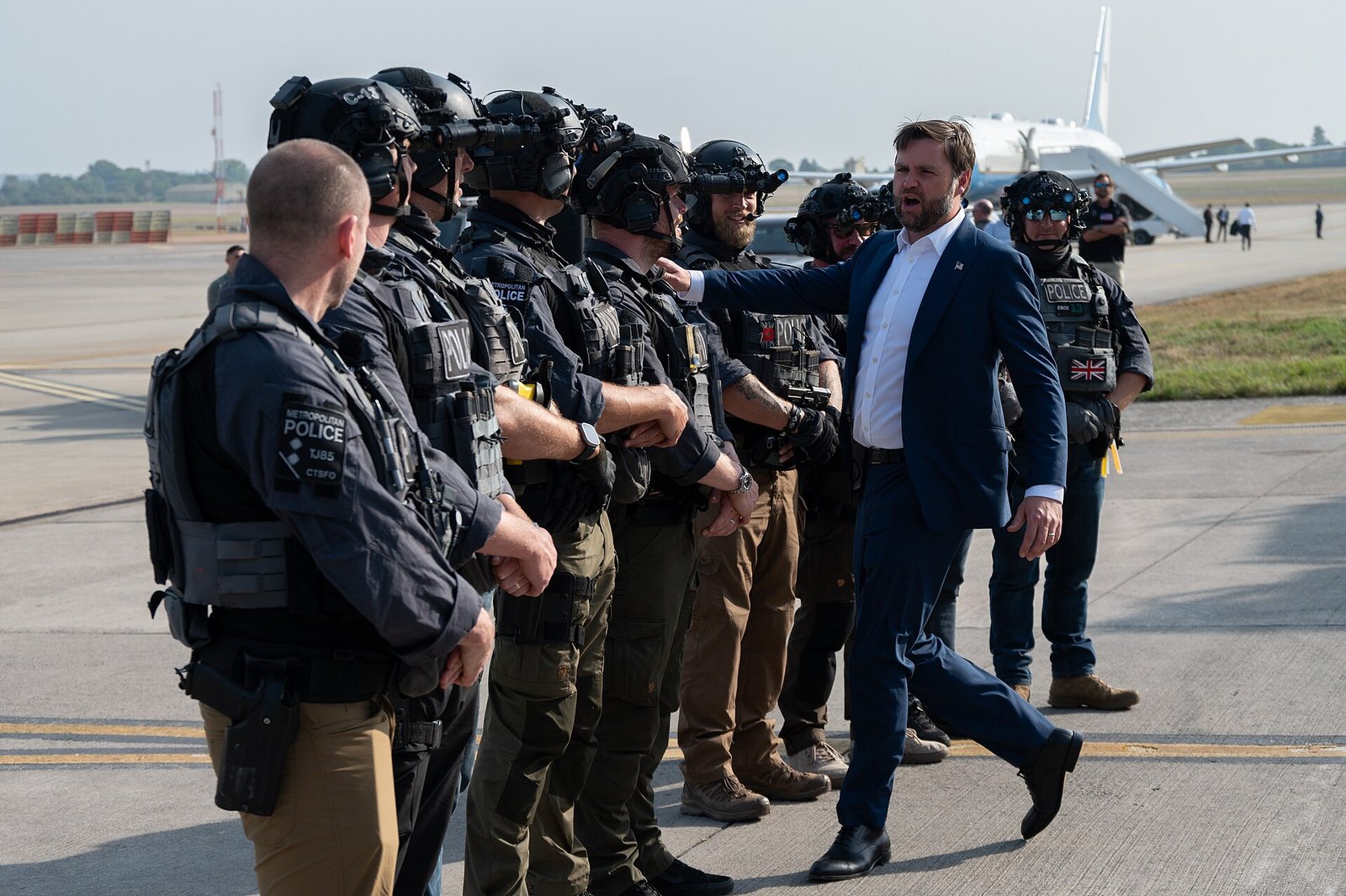
Ten hours of negotiations in a Swiss conference room, a nuclear program on the table, a president threatening the other side from his phone while his vice president was inside trying to make a deal. That is the story of June 21 in Bürgenstock, Switzerland, and it is worth understanding clearly because what happens in the next 60 days depends on it.
The United States and Iran, with Qatar and Pakistan as mediators, wrapped the first round of formal talks under their memorandum of understanding with something that counts as progress by the standards of this relationship: a roadmap. A plan for a plan, but still a plan.
What Actually Got Agreed
Per NBC News, Vice President JD Vance, Steve Witkoff and Jared Kushner concluded more than 10 hours of negotiations in Switzerland. The joint statement from the mediating countries said the parties established a roadmap for reaching a final deal within 60 days.
Per PBS NewsHour, the discussions covered Tehran’s nuclear program, the Strait of Hormuz, and security questions in Lebanon, meaning Hezbollah. Those three items cover the core of what the two countries have been fighting about for decades. Agreeing to discuss them, formally and with a timeline attached, is more than nothing.
Vance led the US side. Iran’s chief negotiator Mohammad Bagher Ghalibaf led theirs. Qatar and Pakistan sat in between, which matters: both have relationships with Tehran that Washington lacks.
The Trump Wrench in the Middle of It All
Here is where the story gets harder to hold in a single frame. While Vance was inside the room trying to build toward a deal, President Trump posted on Truth Social that Iran must immediately stop their proxies in Lebanon from causing trouble, adding that if they did not, the US would hit Iran very hard again, only harder.
Iranian state media said the talks entered a difficult phase and briefly recessed after the post. Per Al Jazeera, the session went through high drama over both Trump’s threats and the Lebanon question.
This is not unprecedented in how this administration operates. The president applies external pressure while negotiators work inside. Whether that dual-track approach strengthens or weakens the US position depends entirely on which party blinks. Iran has to decide whether the threat is real, performative, or both.
What the 60-Day Clock Actually Means
A roadmap with a 60-day window is not a deal. It is a commitment to try to get to one. The difference matters enormously. The roadmap tells you what the parties agreed to talk about and in what sequence. The deal, if it comes, is what they actually agreed to do.
Per CBC News, technical talks are continuing after this first round, which suggests the parties have not simply agreed and walked away. The machinery is running, even if slowly.
Sixty days from June 21 puts the deadline in the third week of August. That is a tight window for resolving questions about uranium enrichment levels, inspection regimes, Strait of Hormuz shipping guarantees, and the fate of Iranian proxy forces in Lebanon, all of which are on the table. Missing the deadline is not necessarily fatal. But it shifts leverage back toward whoever is more willing to let talks collapse.
Why Iran Is at the Table
A useful question to ask is why Iran is here at all. The country has been under severe sanctions and sustained military pressure. Its air defenses were struck, its economy is strained, and its regional proxies have been weakened. For Tehran, a deal offers relief from sanctions and an end to active military threat. That is a powerful incentive.
The risk for Iran is domestic. A deal with the United States requires selling that deal to hardliners who have built careers on opposing exactly this kind of engagement. Every compromise Iran makes in the room becomes ammunition for political opponents at home. That constraint is real and it shapes how far Iranian negotiators can actually go.
Why the US Is at the Table
For the Trump administration, a deal closes the Iran war chapter and frees up attention and military resources. A deal also becomes a signature foreign policy achievement heading into the midterms. There is nothing that boosts an incumbent party’s standing like ending a war.
The challenge is that the same political logic applies to the pressure track. Striking Iran and winning can also play as strength. The administration seems to be trying to hold both simultaneously, a diplomatic track and a threat track running in parallel, hoping the combination produces faster movement from Tehran than either would alone.
What the Mediators Bring
Qatar and Pakistan as mediators is not a coincidence. Qatar has maintained relations with both sides through the entire period of conflict and sanctions. Pakistan has a long border with Iran and its own interest in regional stability. Both countries can carry messages and test positions that the US and Iran cannot exchange directly without it looking like weakness or capitulation.
The mediators are also, in a sense, guarantors. If Iran agrees to something and the deal collapses because of a US action or statement, the mediators’ credibility is damaged. That gives them an incentive to keep the process from blowing up, which is a stabilizing force even when the principals are acting erratically.
What Happens Next
Technical talks continue. The two sides work through the specifics of what a final deal would actually require from each party. Verification regimes, timelines for sanctions relief, nuclear enrichment limits, the future of Iranian forces in Lebanon. Each one is a negotiation inside the negotiation.
The 60-day clock is running. Whether it produces a deal, an extended deadline, or a collapse back into confrontation will define a significant part of 2026’s second half, not just for the Middle East but for US politics and oil markets that react to every signal from the region.
The NewsSparq Takeaway
Three things to hold onto.
One, a roadmap is not a deal, but it is real progress. Two sides who have been at war agreeing to a 60-day timeline for a final agreement is not nothing. It is a structure the talks did not have before.
Two, Trump’s post nearly blew up his own talks. That is a structural vulnerability in the dual-track approach. The president and his negotiators need to stay roughly coordinated or the strategy works against itself.
Three, the 60-day deadline is the only number that matters now. Watch August. If a deal emerges, this session looks like history. If it collapses, the talks will have been the pause before the next round of pressure. There is very little middle ground on offer.
The war paused long enough for both sides to sit down. Whether they can agree in 60 days to a framework for ending it is the most consequential diplomatic question on the board right now.
Sources: NBC News, PBS NewsHour, Al Jazeera, CBC News.
By The NewsSparq Editorial Desk
Related Stories From NewsSparq
- Trump Posted a Threat Against Iran While Vance Was Sitting Across the Table From Them
- The Iran War Is Officially Over. The Fires Have Not Stopped.
- The US and Iran Just Signed a Peace Deal in Secret, and 92 Ghost Ships Tell You How Fragile It Really Is
- The US and Iran Are Now Negotiating With Bombs, and the Whole World Is Paying the Bill