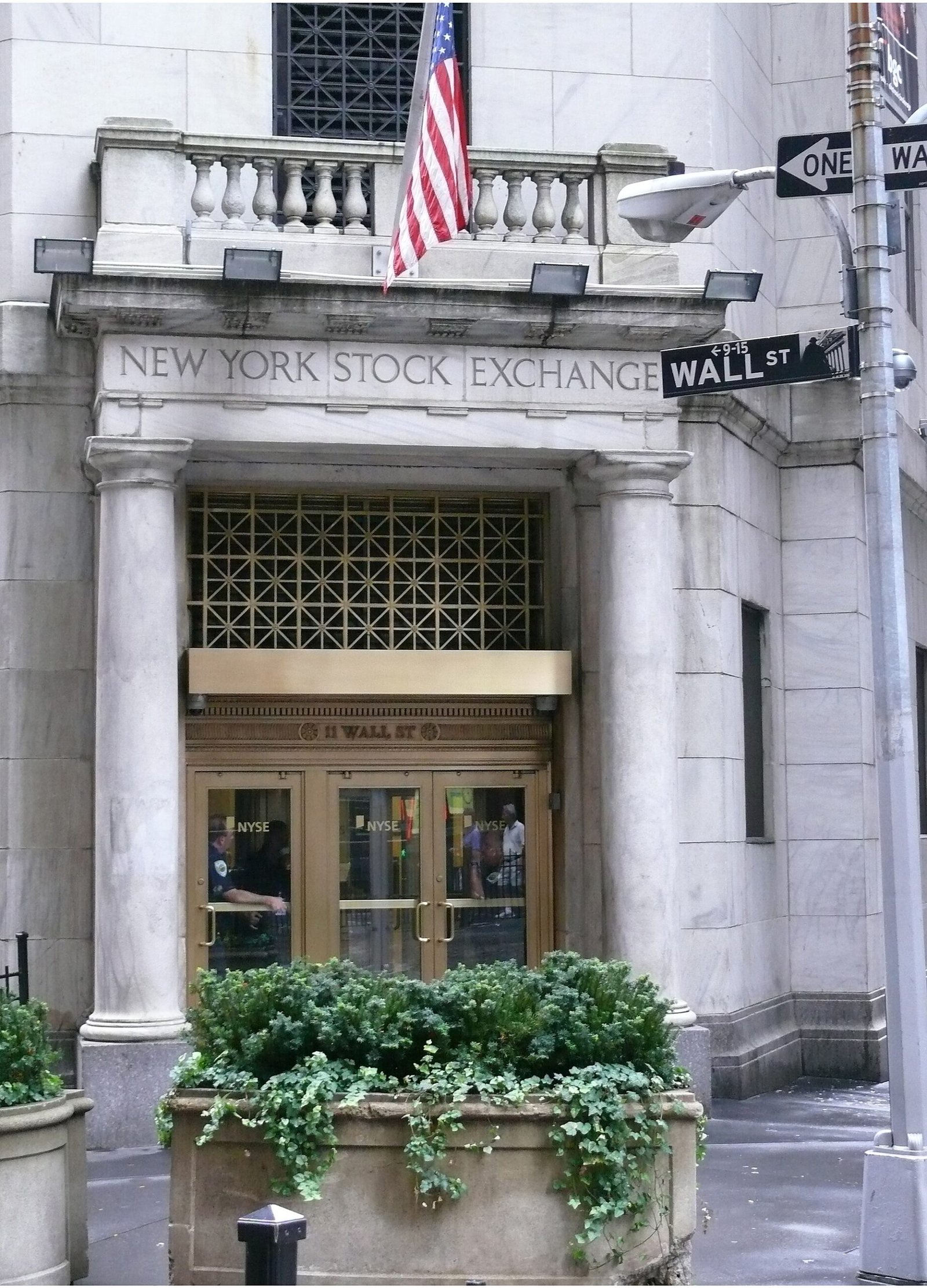
Markets can usually absorb one shock at a time. What made Thursday the worst session in a month was that two arrived together, and they came from completely unrelated parts of the world.
The Nasdaq Composite fell 553.21 points, or 2.2 percent, to close at 25,137.69. The S&P 500 lost 90.66 points, 1.2 percent, to 7,408.30. The Dow Jones Industrial Average dropped 506.93 points, 1.0 percent, to 51,711.65, per Zacks data published by the Globe and Mail. For both the S&P 500 and the Nasdaq it was the worst single day since June 23.
Shock one: the AI bill came due
The first blow landed from Alphabet’s earnings, reported after the close on July 22. The company raised its full-year 2026 capital expenditure guidance to between $195 billion and $205 billion, up from $180 billion to $190 billion. That is an increase of $15 billion to $20 billion in a single guidance revision.
Investors had been treating enormous AI infrastructure spending as a cost of doing business that would eventually level off. A guidance raise of that size, from the company with arguably the strongest cloud growth story in the market, reset the assumption for every hyperscaler at once.
The sector damage tells the story. Seven of the S&P 500’s eleven sectors closed lower, with Communications Services down 5.2 percent and Consumer Discretionary down 5.1 percent leading the decline. Consumer Staples fell 1.1 percent. Industrials, notably, actually rose 1.8 percent. The Magnificent Seven lost close to $800 billion in combined market value in a single session, according to Yahoo Finance.
Shock two: oil crossed $100
The second blow came from the Red Sea. Brent crude rose 7 percent to settle at $100.69 a barrel, its highest close since May 22, after Yemen’s Houthis claimed strikes on two Saudi oil tankers. West Texas Intermediate rose 6.2 percent to $92.19. Brent traded as high as roughly $102 intraday.
Oil above $100 does something specific to equity markets. It raises input costs across industrials, transport and consumer goods simultaneously, and it complicates the inflation picture that rate expectations are built on. Arriving on the same afternoon as an AI capex scare, it removed the obvious places to hide.
Fear registered accordingly. The CBOE Volatility Index rose 12.4 percent to 18.70 on volume of 16.21 billion shares. Decliners led advancers by 2.99 to one on the New York Stock Exchange and 2.52 to one on the Nasdaq, which is the kind of breadth that says the selling was broad rather than concentrated in a few names.
The economic data underneath was fine
It is worth noting what did not cause this. Initial jobless claims fell 22,000 to 187,000 for the week ended July 18, with continuing claims at 1,796,000 for the week ended July 11. Those are strong numbers. There was no Federal Reserve meeting, no rate decision and no inflation print in this window.
In other words, Thursday was not a growth scare or a policy shock. It was a repricing of the AI trade colliding with a geopolitical supply shock, on a day when the underlying economy looked healthy.
Asia took it harder
The overnight spillover was worse abroad than at home. South Korea’s Kospi fell 5.9 percent with Samsung Electronics down 8 percent. Japan’s Nikkei 225 dropped 3.1 percent to 64,377.28. The Hang Seng fell 1.3 percent to 24,891.84, the Shanghai Composite 1.2 percent to 3,830.19, and Australia’s ASX 200 1.0 percent to 8,755.10.
The Kospi’s 5.9 percent decline is the number that stands out, and it makes sense once you notice that the AI capex scare lands hardest on the economies that build the hardware. When American investors decide the AI buildout may be overspending, Korean memory manufacturers feel it first.
Friday steadied, without really recovering
Friday, July 24, ended mixed. The Dow edged higher while the S&P 500 and Nasdaq slipped again, leaving both on course for a second consecutive losing week, the first back-to-back weekly decline since March 2026, the Associated Press reported.
We are describing Friday’s close in words rather than numbers on purpose. Two reputable sources published closing figures for that session that cannot be reconciled with each other, and we were unable to obtain a third to break the tie. Publishing a precise number we cannot stand behind would be worse than describing the direction accurately.
What is clear is that oil reversed. Brent fell 2.8 percent to $97.89, its first decline in a week, trading as low as roughly $95 intraday on reports that Pakistan was brokering a path to US-Iran talks. The 10-year Treasury yield eased from 4.71 to 4.68 percent. Micron Technology fell 5.7 percent and Broadcom 2.8 percent. The new tariffs took effect during this session as well.
Why This Matters
The AI capex question is the one that will define this market for the rest of the year. For two years, enormous spending by hyperscalers has been read as evidence of conviction. Thursday was the first session where a major upward revision was read instead as evidence of a bill that keeps growing, and Alphabet’s chief financial officer signalled that capex will rise significantly again in 2027.
The oil shock is the reminder that the AI story does not run in a vacuum. A conflict thousands of miles away moved crude 7 percent in a day and reset the inflation calculus that equity valuations depend on. Both shocks hit the same afternoon, which is why the breadth was so poor.
And the healthy labour data underneath is the genuinely interesting detail. Jobless claims fell by 22,000 in the same week the market had its worst day in a month. Whatever is driving this, it is not the American economy weakening.
The NewsSparq Takeaway
Three things to hold onto.
One, the numbers were real and broad. Nasdaq down 2.2 percent to 25,137.69, S&P 500 down 1.2 percent to 7,408.30, Dow down 1.0 percent to 51,711.65, the worst day for two of the three since June 23, with decliners beating advancers nearly three to one on the NYSE.
Two, two unrelated shocks landed together. Alphabet’s capex guidance jumping to $195 billion to $205 billion, and Brent crude settling at $100.69 after attacks on Saudi tankers in the Red Sea.
Three, the economy was not the problem. Initial jobless claims fell 22,000 to 187,000, there was no Fed meeting and no inflation print, and Industrials actually finished the day up 1.8 percent.
Two shocks from opposite ends of the earth found the market on the same afternoon. The economy underneath them was doing fine, which is precisely what made the selling so hard to explain away.
Sources: Globe and Mail, Zacks, Yahoo Finance, Washington Times, Associated Press, The Motley Fool, Investing.com.
By Md Danish, Founder and Editor in Chief, NewsSparq
Related Stories From NewsSparq
- Kevin Warshs First Fed Meeting Just Told Wall Street the Easy Money Is Not Coming Back
- AI Stocks Are Still Up Massively This Year. Wall Street Is Starting to Ask the Uncomfortable Question.
- Trumps Spy Chief Pick Blew Up in His Face, So He Reached for a Wall Street Lawyer to Clean It Up
- The House Voted to End the Iran War. Hours Later the Senate Fell Two Votes Short.