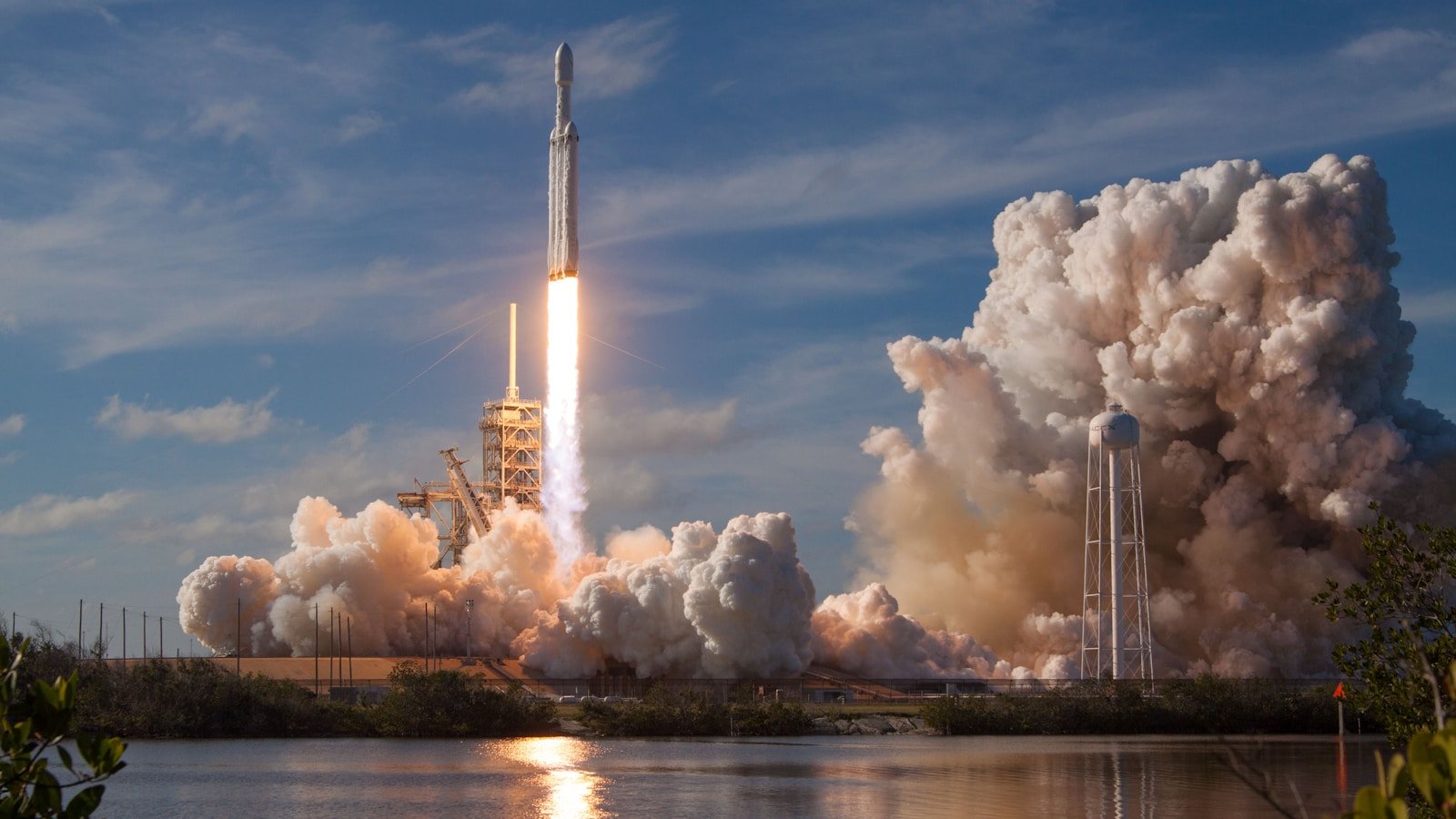
It finally happened. SpaceX went public, and it did not just go public, it staged the largest IPO in the history of the stock market. A $75 billion raise. A valuation near $1.75 trillion. Order books four times oversubscribed before the bell even rang.
And in a twist that defines this whole moment, regular people were invited in. An estimated $100 billion in retail orders poured through Robinhood, Fidelity and SoFi. This was sold as the people’s rocket company. The math underneath tells a more complicated story.
Here is what investors are actually buying when they buy SPCX.
SpaceX IPO: The record
SpaceX priced at $135 a share, selling roughly 555.6 million shares to raise about $75 billion, with trading beginning today on the Nasdaq under the ticker SPCX, per launch-day coverage. That raise more than doubles the previous record, Saudi Aramco’s $29.4 billion in 2019.
Demand was off the charts. Order books topped $250 billion against the $75 billion sought, leaving the deal roughly four times oversubscribed, Capital.com reported. The valuation, around $1.75 trillion, would make SpaceX roughly the seventh-largest US company, right above Tesla.
The math nobody wants to look at
Now the part the celebration skips. SpaceX is being valued at roughly 94 times its 2025 revenue, and the company posted a net loss of $4.27 billion in the first quarter of 2026 alone, against an accumulated deficit of $41.3 billion, per the IPO financials.
Read that ratio again. Ninety-four times revenue, for a company losing billions a quarter. That is not a valuation built on current profits. It is a valuation built almost entirely on belief, in Elon Musk, in Starlink, and in a future that has not arrived yet.
Starlink is the engine, everything else is the bet
There is a real business in here, and it is Starlink. The satellite internet unit posted $11.4 billion in 2025 revenue, $4.4 billion in operating profit, a 63 percent EBITDA margin and 10.3 million subscribers, TradingKey reported. Subscribers crossed 10 million in February and are growing by up to 1.5 million a month.
Starlink is genuinely, wildly profitable. The problem is that the rest of the bundle is not. Which brings us to the part most retail buyers may not realize they are signing up for.
You are buying Musk’s whole empire, like it or not
Buying SPCX does not just buy rockets and Starlink. The listed company folded in xAI, Musk’s AI venture, through an all-stock merger earlier this year, bringing the Grok chatbot and the Colossus supercomputer onto the books. xAI posted $3.2 billion in revenue against a $6.4 billion operating loss, per the same coverage.
So a retail investor who wanted a piece of the rocket company is also buying a money-losing AI lab and, through the broader structure, exposure to X. That is the bundle. The profitable satellite business is carrying a launch operation and an expensive AI bet, all priced as one.
The timing is almost too perfect
The debut landed on a euphoric market day. The Dow surged about 900 points on June 11 after Trump said he had cancelled planned strikes on Iran and signaled a peace deal was close, Yahoo Finance reported. Space-adjacent names rode the fever, with Virgin Galactic spiking 23 percent.
Only 3 to 4 percent of SpaceX shares are actually available for public trading at first, with more than 75 percent of the offering going to existing investors and insiders under a 180-day lockup, per IndexBox. A tiny float plus enormous demand is a recipe for a wild first few days, in both directions.
The fine print retail investors should read before celebrating is about control. In founder-dominated structures, the person at the top often keeps voting power far beyond their economic stake, which means ordinary shareholders ride along on the company’s success without much say in how it is run. You are buying conviction in one person’s vision, and that vision has delivered spectacularly, but it also means the usual checks that protect small investors are weaker here than in a typical public company. The upside is real. So is the dependence on a single founder staying right.
Why This Matters
This is the moment retail America was invited, en masse, to buy into Elon Musk’s empire, and the invitation arrived at a market high, on a peace-rally day, at 94 times revenue. The euphoria is real, but so is the setup. When everyone is allowed in at the top, somebody is usually being handed the bag.
It also marks a milestone for the AI-and-space supercycle. Wall Street finally got to put a number on Musk’s ambition, and the number was $1.75 trillion for a company that loses billions. Whether that looks visionary or insane will depend entirely on whether Starlink can keep carrying the weight of everything bolted to it.
The NewsSparq Takeaway
Three things to hold onto.
One, the record is real and so is the hype. Biggest IPO ever, four times oversubscribed, $100 billion in retail orders. The demand is not fake. The question is what that demand is paying for.
Two, Starlink is the whole investment case. One wildly profitable satellite business is carrying a money-losing launch operation and a money-losing AI lab. Strip out Starlink and the math gets frightening fast.
Three, mind the float and the lockup. Only 3 to 4 percent of shares trade freely now, and a 180-day insider lockup looms. Expect volatility, and remember the first public earnings report in November is the real test.
Retail America wanted a piece of the rocket company, and today it gets one. Just know what is in the box. A genuinely great satellite business, a famous launch operation that loses money, an AI lab that loses more, and a valuation that assumes all of it works out. That is the people’s moonshot. Buy the dream with your eyes open.
Sources: Teslarati, IndexBox, TradingKey, Yahoo Finance.
By Md Danish, Founder and Editor in Chief, NewsSparq
Related Stories From NewsSparq
- The Biggest Parasite Outbreak in US History Came From a Bag of Shredded Lettuce
- OpenAI Is Heading for the Public Markets, and It Could Be the Biggest Tech IPO Ever
- Trump Backs Off a $1.8 Billion Fund After His Own Party Threatened to Kill It
- Nvidia, SpaceX and Big Tech All Got Hammered. The Market Just Changed the Question It Is Asking About AI.