A state that normally records about fifty cases of a parasitic infection in an entire year has just recorded more than eight thousand of them in about a month. That is not a rounding error or a reporting artifact. That is Michigan right now, and the thing that appears to have done it arrived in a bag of shredded lettuce.
On Friday the Centers for Disease Control and Prevention added four more states to the outbreak, bringing the total to nine, CBS News reported. This is now the largest cyclosporiasis outbreak ever recorded in the United States, and the investigation keeps pointing back to the same place: shredded iceberg lettuce grown in central Mexico.
Nine states and still counting
Illinois, Kansas, Oklahoma and Pennsylvania joined the outbreak on July 24, adding to Indiana, Kentucky, Michigan, Ohio and West Virginia. Across those nine states the CDC counted 1,947 people infected with Cyclospora who also reported eating at Taco Bell. Illness onset dates in the lettuce-linked cluster run from June 22 through July 20.
The national picture is larger and messier than that. Since May 1 there have been 4,173 domestic cases confirmed in a laboratory, with more than 7,400 additional cases still awaiting confirmation. For a sense of how far outside normal this sits, the United States typically records somewhere between 200 and 1,000 cyclosporiasis cases in a full year. This outbreak has already cleared the top of that range several times over, and the lab backlog means the real number is still moving.
Michigan is carrying the outbreak
Michigan is bearing the heaviest load by a wide margin. The state reported 7,664 confirmed cases as of July 23, an increase of 493 in a single day, CBS News Detroit reported. By the following day that figure had climbed to 8,176, another jump of 512 in twenty four hours.
As of July 23, 160 people had been hospitalised. The worst-hit counties are Wayne, Ingham, Oakland, Monroe and Washtenaw, though by now nearly every county in Michigan has logged at least one case. Officials in Monroe County were the ones who first noticed the pattern in late June, according to CBS News Detroit, which is a reminder that most outbreaks are caught by somebody local noticing that their numbers look wrong.
Wayne County health officials put the practical warning plainly. Without treatment, they said, illness can last for weeks and may come and go. That last detail is what makes this particular parasite so miserable to live through. People assume they have recovered, go back to work, and then it returns.
The supplier at the centre of it
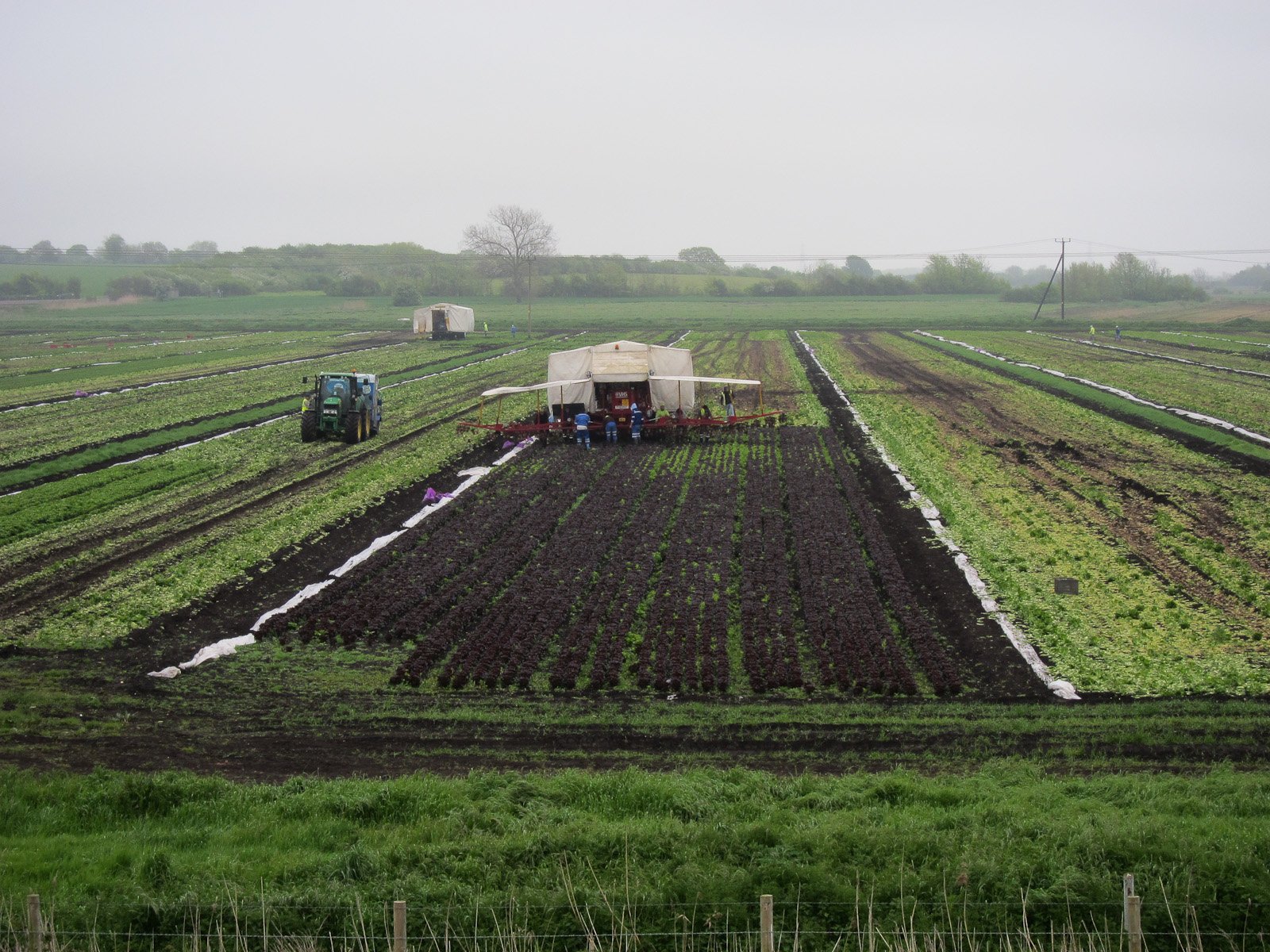
The implicated product is shredded iceberg lettuce sourced from central Mexico and supplied by Taylor Farms. On July 17 the company voluntarily recalled all iceberg lettuce it had sourced from that region, CBS News reported.
Taylor Farms is not a small operation. Founded in 1995 by Bruce Taylor in California’s Salinas Valley, it employs roughly 25,000 people and reported about $6 billion in revenue in 2022. Its customer list includes Walmart, Target, Whole Foods, Costco, Taco Bell and McDonald’s. When a supplier at that scale has a contamination problem, the blast radius is the American grocery aisle rather than one restaurant chain.
The company also has history here. It was tied to the 2024 E. coli contamination of onions served on McDonald’s Quarter Pounders, and to a cyclospora outbreak in 2013 involving salad mixes. None of that proves anything about the current investigation, but it is context that belongs in the record.
What the numbers did to a brand
Consumers reacted well before regulators finished their work. Taco Bell foot traffic fell 31 percent on July 17 compared with a typical Friday. That is the kind of single-day collapse that usually follows a formal national recall announcement, and here it happened while the investigation was still open and the picture still forming.
Jennifer McEntire, founder of Food Safety Strategy, captured how unusual the scale looks even to people who do this professionally. When you see something of this magnitude, she said, it is surprising, even to those of us accustomed to outbreaks.
The investigation is not clean, and saying so matters
Two complications deserve stating plainly rather than smoothing over. The first is that the Food and Drug Administration determined a positive Taylor Farms lettuce sample was actually a false positive. The agency still considers Taylor Farms lettuce linked to the outbreak, but the single most direct piece of laboratory evidence did not survive scrutiny.
The second is that more than one outbreak is happening at once. On July 23 federal officials disclosed they were investigating a separate cyclospora outbreak affecting 72 people, with no product identified, PBS NewsHour reported. That cluster is distinct from the lettuce cases. Merging the two would misstate the size and the cause of either one.
Why This Matters
Cyclospora is not a household name the way salmonella and E. coli are, and that is part of the problem. It is a parasite spread through contaminated food or water, it does not pass from person to person, and it causes prolonged watery diarrhoea that can drag on for weeks and relapse after apparent recovery. It is treatable with antibiotics, which is exactly why it matters that people know to ask a doctor for testing instead of waiting it out at home.
The structural lesson runs past any single company. When one supplier feeds a handful of national restaurant chains and grocery giants at once, a single contaminated growing region can seed illness across a third of the country before anyone connects the dots. A county official noticed something odd in late June. The recall came on July 17. Cases were still climbing by hundreds a day on July 24.
No deaths have been reported in this outbreak according to the reporting we were able to verify, and that deserves saying clearly rather than burying. But thousands of illnesses serious enough to send 160 people to hospital, all traced to a bagged salad ingredient, is a supply chain telling you something about how it is built.
The NewsSparq Takeaway
Three things to hold onto.
One, the scale is genuinely historic. More than 4,100 lab-confirmed cases nationally since May 1 with over 7,400 more pending, against a normal year of 200 to 1,000. Michigan alone is above 8,000 confirmed in a state that averages roughly 50 annually.
Two, the trail leads to one supplier’s regional crop. Shredded iceberg lettuce from central Mexico, supplied by Taylor Farms, recalled on July 17 by the company itself. That same supplier serves Walmart, Target, Costco, Whole Foods, Taco Bell and McDonald’s.
Three, the case is strong but not airtight. The FDA’s positive lettuce sample turned out to be a false positive, and a second unrelated cyclospora outbreak of 72 people is under investigation with no product named. Both facts belong in any honest account of this.
Fifty cases a year became eight thousand in a month, and the trail runs back to a bag of shredded lettuce. The recall is finished. The counting is not.
Sources: CBS News, CBS News Detroit, CBS News Detroit, July 23, CBS News, Taylor Farms, PBS NewsHour.
By Md Danish, Founder and Editor in Chief, NewsSparq
Related Stories From NewsSparq
- SpaceX Just Pulled Off the Biggest IPO in History, and Retail America Was Invited to the Party
- Europe Approved the Biggest Media Deal in a Generation. A California Judge Froze It Anyway.
- Wall Streets Worst Day in a Month Came From Two Directions at Once
- Russia Hit Kyiv With One of Its Biggest Barrages of the War, and Ukraine Stopped None of the Ballistic Missiles